Categories
Environment

Earth Week Celebration

Earth WeekEarth Week Celebration
Remarks delivered at Old Brick on April 19, 2014
Iowa City, Iowa

If you haven’t seen the buffalo at Yellowstone National Park, you should. One gets a sense of possibilities that existed on the plains as the herds wander and belch their way back and forth inside the park. There is space for them to seem vast, even if they are a fraction of what they once were. The herds will never return to the great plains, but to see the bison at Yellowstone made the trip for me.

If you are on the Internet at all, you have likely heard of the YouTube videos showing buffalo exiting Yellowstone. The assertion is that the giant caldera that makes the park unique is getting ready to erupt in a cataclysmic explosion that portends the end of life as we know it.  Scientists don’t agree. Yes, Yellowstone is a big volcano. Yes, it last erupted over 600,000 years ago. But no, a new eruption isn’t overdue because science doesn’t work like that, despite the activities of bison.

Here’s what does matter. The difference between natural pollution of the atmosphere caused by volcanoes and that caused by humans.

I want to discuss three more things: Mount Tambora, Mount Saint Helens, and nuclear famine.

On April 10, 1815, Mount Tambora in Indonesia produced the largest volcanic eruption in recorded history. The blast was so loud, it was heard 1,200 miles away in Sumatra. It is estimated that the eruption produced 38 cubic miles of volcanic debris.

While some 12,000 people were killed directly by the eruption, the larger death toll was from starvation and disease, as fallout from the eruption ruined local agricultural productivity, killing another 50,000 people or more.

What made matters worse was the dispersion of ash throughout the atmosphere. It darkened the sky and created climate anomalies including what we call volcanic winter. 1816 became known as the year without a summer because of weather. Crops and livestock died in much of the Northern Hemisphere, resulting in the worst famine in the 19th century.

While nowhere nearly as bad as Mount Tambora, the volcanic eruption on May 18, 1980 at Mount Saint Helens is fixed in memory for people living at the time. It was the deadliest and most economically destructive volcanic event in the history of the United States.

If we compare them, Mount Saint Helens was much smaller than the Mount Tambora eruption. According to the index that measures these things, Mount Tambora was rated 7 while Mount Saint Helens was rated 5. We know about Mount Saint Helens because it is fixed in our memories. We should also remember Mount Tambora as it was more important.

That brings me to nuclear abolition. Recent research has indicated that two billion people may be at risk in a limited, regional nuclear weapons exchange by two of the world’s nuclear states. The reasons are similar to what caused the year without a summer. The firestorm after the exchange would create soot and ash in the atmosphere many times worse than the single year without a summer after Mount Tambora erupted. Simply put, it would be a disaster of unprecedented proportion. One that could happen or be prevented by humans.

The conclusion people should draw is there is no reason for nuclear weapons to exist and they should be abolished.

The next time people on the Internet worrying about the end of civilization as we know it based upon YouTube videos, I recommend you turn off the computer and focus on preventing disasters we can by abolishing nuclear weapons.


Categories
Environment

Earth Week Sustainability Schedule

the-climate-reality-project-logoLAKE MACBRIDE— I will be speaking about personal finance, the environment and nuclear abolition four times between April 19 and 24. If you are nearby, please consider attending one of these events:

April 19, 11 a.m.: “Alternative Living: Focus on Finances” with Solon resident and writer Paul Deaton. Paul gave up his 9 to 5 job to focus on his writing. He will describe his creative methods of putting food on the table and how he covers his expenses to survive and thrive. Part of the American Library Association Money Smart Week, Solon Public Library, 320 W. Main St., Solon, Iowa.

April 19, 1 until 3 p.m.: Soap Box Speech on the environment: “Mount Tambora, Mount St. Helens and Nuclear Famine” at the Celebration of Life at Old Brick, 20 East Market St., Iowa City, Iowa.

April 23, 6:30 p.m.: “Earth Week: Climate Reality in Iowa” at 220East, 220 East Fourth St., Waterloo, Iowa.

April 24, 6:30 p.m.: “Earth Week: Climate Reality in Iowa” at the Independence Public Library, 805 1st St. East, Independence, Iowa.

11 a.m.: “Alternative Living: focus on finances” with Solon resident and writer Paul Deaton. Paul gave up his 9-5 job to focus on his writing. He will describe his creative methods of putting food on the table and how he covers his expenses. – See more at: http://www.soloneconomist.com/content/solon-public-library-50#sthash.PGm9t3cj.dpuf

11 a.m.: “Alternative Living: focus on finances” with Solon resident and writer Paul Deaton. Paul gave up his 9-5 job to focus on his writing. He will describe his creative methods of putting food on the table and how he covers his expenses. – See more at: http://www.soloneconomist.com/content/solon-public-library-50#sthash.PGm9t3cj.dpuf

11 a.m.: “Alternative Living: focus on finances” with Solon resident and writer Paul Deaton. Paul gave up his 9-5 job to focus on his writing. He will describe his creative methods of putting food on the table and how he covers his expenses. – See more at: http://www.soloneconomist.com/content/solon-public-library-50#sthash.PGm9t3cj.dpuf

11 a.m.: “Alternative Living: focus on finances” with Solon resident and writer Paul Deaton. Paul gave up his 9-5 job to focus on his writing. He will describe his creative methods of putting food on the table and how he covers his expenses. – See more at: http://www.soloneconomist.com/content/solon-public-library-50#sthash.PGm9t3cj.dpuf

11 a.m.: “Alternative Living: focus on finances” with Solon resident and writer Paul Deaton. Paul gave up his 9-5 job to focus on his writing. He will describe his creative methods of putting food on the table and how he covers his expenses. – See more at: http://www.soloneconomist.com/content/solon-public-library-50#sthash.PGm9t3cj.dpuf
Categories
Environment

Letter to the Editor

Self Portrait in ShadowTo the editor,

It is ironic that Gary Wattnem, a career ophthalmic instrument salesman, can’t see clearly enough to support Senator Rob Hogg and Representative Bobby Kaufmann in their opposition to the Keystone XL pipeline, based on eminent domain concerns. In his recent letter to the editor, Wattnem signed as a U.S. Army officer, reminding us that old soldiers never die, but in his case, should consider taking Douglas MacArthur’s example and just fade away.

Under the Obama administration, there has been a resurgence of domestic oil production. “For the first time in nearly two decades, we produce more oil here in the United States than we buy from the rest of the world,” said President Obama on Jan. 16.

According to former oil man T. Boone Pickens on a recent episode of Iowa Press, the U.S. exports three million barrels of light sweet crude each day because of development in the Bakken and Eagle Ford formations, and West Texas. If refineries would retool to process light sweet, said Pickens, the oil could be used domestically. If foreign oil were a national security issue, that’s what we’d do.

Keystone is about getting tar sands oil to the global market, not about U.S. national security. Condemning U.S. property to serve the interests of a Calgary, Alberta based company would be plain wrong.

By throwing his uniform around the issue, Wattnem tarnished the rest of us who served.

Categories
Environment

Climate Reality in Independence

Earth Week Presentation at the Independence Public Library

the-climate-reality-project-logoINDEPENDENCE, Ia.– Paul Deaton, a climate leader for The Climate Reality Project, will make a presentation titled, “Earth Week: Climate Reality in Iowa,” on Thursday, April 24 , at 6:30 p.m. at the Independence Public Library as part of the library’s Earth Week activities.

The presentation will address the science of climate change, then focus on recent extreme weather events around the world and in Iowa. It will include discussion of the 2012 drought and last year’s weird hydrology cycle of a very wet and late spring coupled with drought throughout much of the summer, connecting the dots between climate change and the extreme weather. After the presentation, there will be a question and answer period.

About Paul Deaton

Paul Deaton is a native Iowan. He is a member of the Climate Reality Leadership Corps, part of a global initiative with more than 5,000 leaders trained personally by former Vice President Al Gore. Deaton participated in the first Earth Day in 1970, and has been speaking and writing on climate change, nuclear non-proliferation, foreign policy and renewable energy for a number of years. He retired from CRST Logistics, Inc. in Cedar Rapids, Iowa, where he was a director of operations. He has been a board member for a number of non-profit organizations during recent years, and worked on a number of projects as a consultant. He is currently serving a four-year term as a Big Grove Township Trustee. Deaton holds a Masters Degree in American Studies from the University of Iowa Graduate College, and is a former United States Army officer. An empty nester, he lives with his wife Jacque near Solon.

About The Climate Reality Project

The Climate Reality Project, founded and chaired by former Vice President and Nobel Laureate Al Gore, is dedicated to unleashing a global cultural movement demanding action on the climate crisis. Despite overwhelming international scientific consensus on climate change, the global community still lacks the resolve to implement meaningful solutions. The Climate Reality Project exists to forge an unwavering bedrock of impassioned support necessary for urgent action. With that foundation, together we will ignite the moral courage in our leaders to solve the climate crisis.

For more information click here.

Categories
Environment

Sunrise on Snow

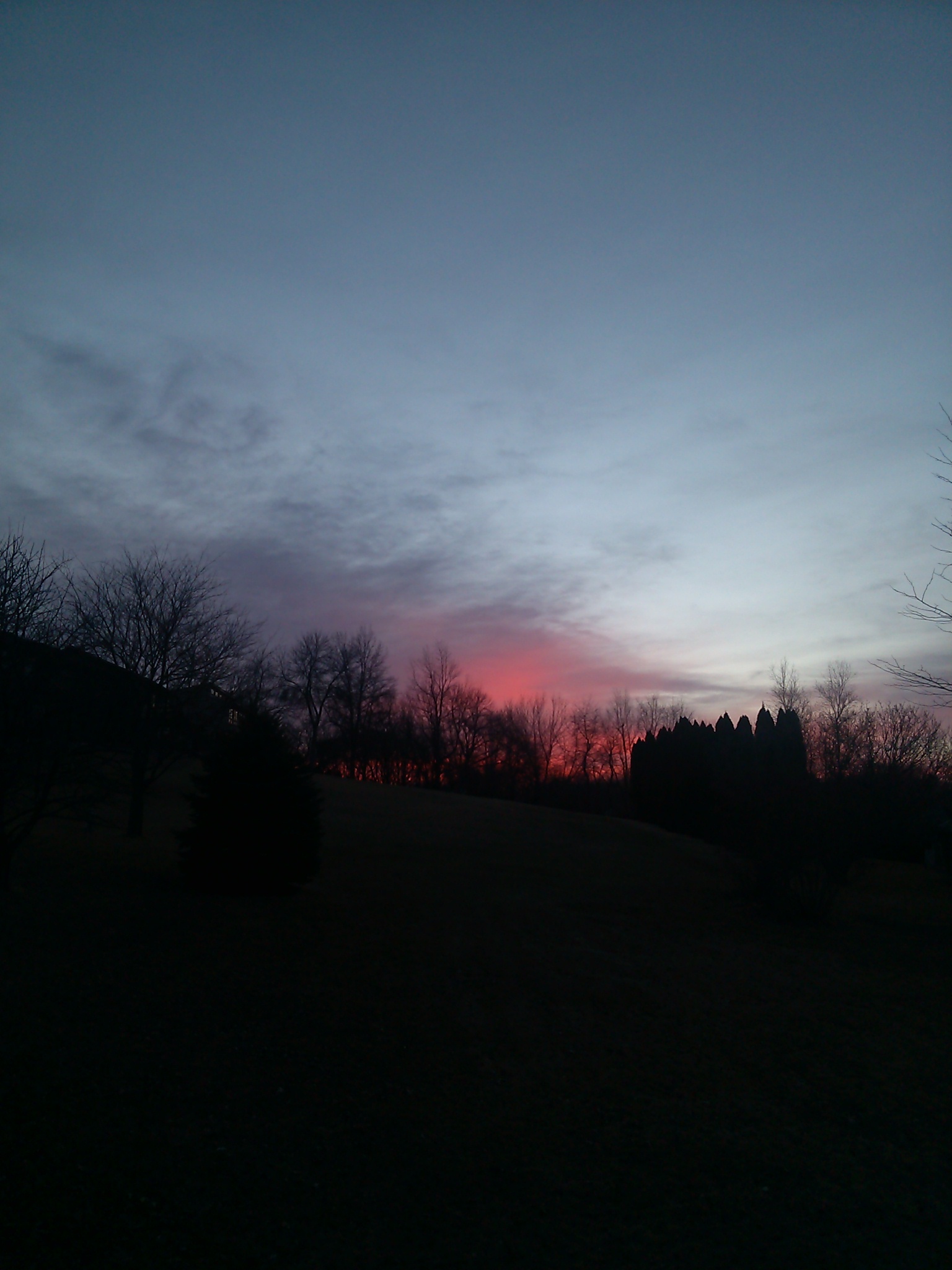
Sunrise
Sunrise

LAKE MACBRIDE— Snow lies on the north side ground near the house, but not for long. The long winter is over, and once the ground thaws, spring will truly have arrived.

There are signs.

I walked the long ditch in front of our property to pick up a discarded can and newspaper. The ground was matted by the heavy snows, and sandy from snow pushed from the road by the contractor. It was also lined with acorns missed by wildlife. The hopeful sign that new Bur Oak trees will be possible— but not here, where I’ll put them under the tree for squirrels and deer to consume, if they wish.

When I arrived at the warehouse yesterday, the aisles were crammed with pallets of yard and garden goods, waiting placement before members arrived. The seedlings I planted indoors are doing okay, although the lettuce is not germinating as well as broccoli and kale. There will be more planting this week.

A retired U.S. Army soldier has been posting a letter to the editors of several newspapers around the state regarding the Keystone XL pipeline, and how we need it for national security reasons. I’ll believe that when the refineries re-tool to handle the 3 million barrels of light sweet crude being exported each day resulting from production in the Bakken and Eagle Ford formations, and in West Texas.

So begins another day in Big Grove— a place beaten down by winter, but ready for spring’s renewal.

Categories
Environment

Letter to the Editor

Hogg Uses Science to Explain Climate Change
To the editor of the Cedar Rapids Gazette
March 13, 2014

A March 8 guest column by Gary Ellis, “Global warming debunked,” suggested that state Sen. Rob Hogg had “confirmed” to the author that those who are concerned about climate change are acting based on “good intentions” not “good science.” That is not right.

I have read Hogg’s book on climate change, “America’s Climate Century,” and he carefully reviews the science that tells us that climate change is a major concern facing our country.

The book is an excellent introduction to the issue and I highly recommend it. It is available at area libraries.

I also have heard Hogg speak about climate change.

Again, Hogg does an excellent job explaining the science if you ever have the chance to hear him.

As Hogg points out, leading scientists have warned us that the effects of climate change are expected to increase substantially in the coming decades.

We urgently need to cut greenhouse gases and get ready for future climate-related disasters.

Categories
Environment

Placeholders

Iowa DNR Forester Mark Vitosh Discussing Preservation of Oak Forests
DNR Forester Mark Vitosh Discussing Preservation of Oak Forests in Iowa
Categories
Environment

Keystone XL Pipeline Comment

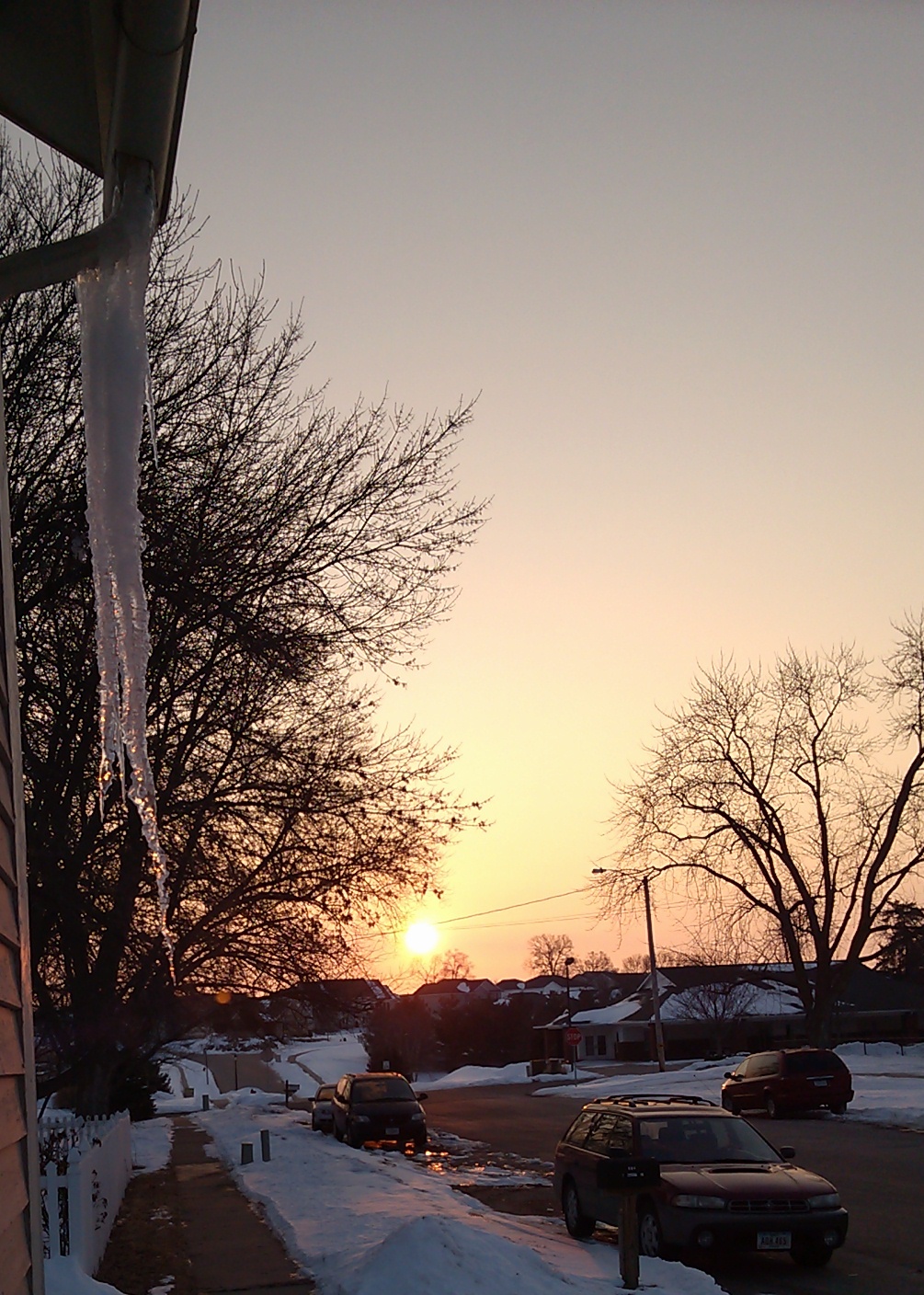
Icicle Sunrise
Sunrise

I filed the following comment today on The U.S. Department of State (DOS) Notice: Presidential Permit Applications: TransCanada Keystone Pipeline, L.P, National Interest Determination, Docket ID: DOS-2014-0003:

As a U.S. citizen I believe it would best serve our national interests, and the interests of commerce to deny the presidential permit to TransCanada Keystone Pipeline, L.P. for these reasons:
1. We are a nation in transition with regard to energy, from existing fossil fuel repositories to more renewable sources of energy. The Keystone pipeline would not contribute in any substantial way to this transition, only exploit existing fossil fuel deposits.
2. Producing oil from the Canadian Tar Sands is viable only because of the high cost of oil on global markets. Such costs do not consider the cost to the environment, particularly the costs of extracting and using Tar Sands oil which produces CO2 and other greenhouse gas emissions with it. Additional greenhouse gas emissions would have a deleterious effect on the greenhouse effect that sustains life on Earth. Keystone pipeline would hasten emissions by making Tar Sands oil more readily available to global markets.
3. I do not support the use of eminent domain in the United States to secure easements to build the pipeline for this Calgary, Alberta-based company. Foreign companies should have no access to the U.S. eminent domain laws, even if limited U.S. interests are served.
4. The precautionary principle should be employed in developing the Keystone pipeline, since there is a lack of consensus about how it might serve the public. There are clear and dangerous concerns expressed about the harm completion of the pipeline could cause to the public and to the environment. Applying the precautionary principle would result in not building the remainder of Keystone pipeline.

Categories
Environment

Placeholders

Icicle Sunrise in Solon
Icicle Sunrise at the Newspaper Office
Categories
Environment

A Persisting Winter of Warming

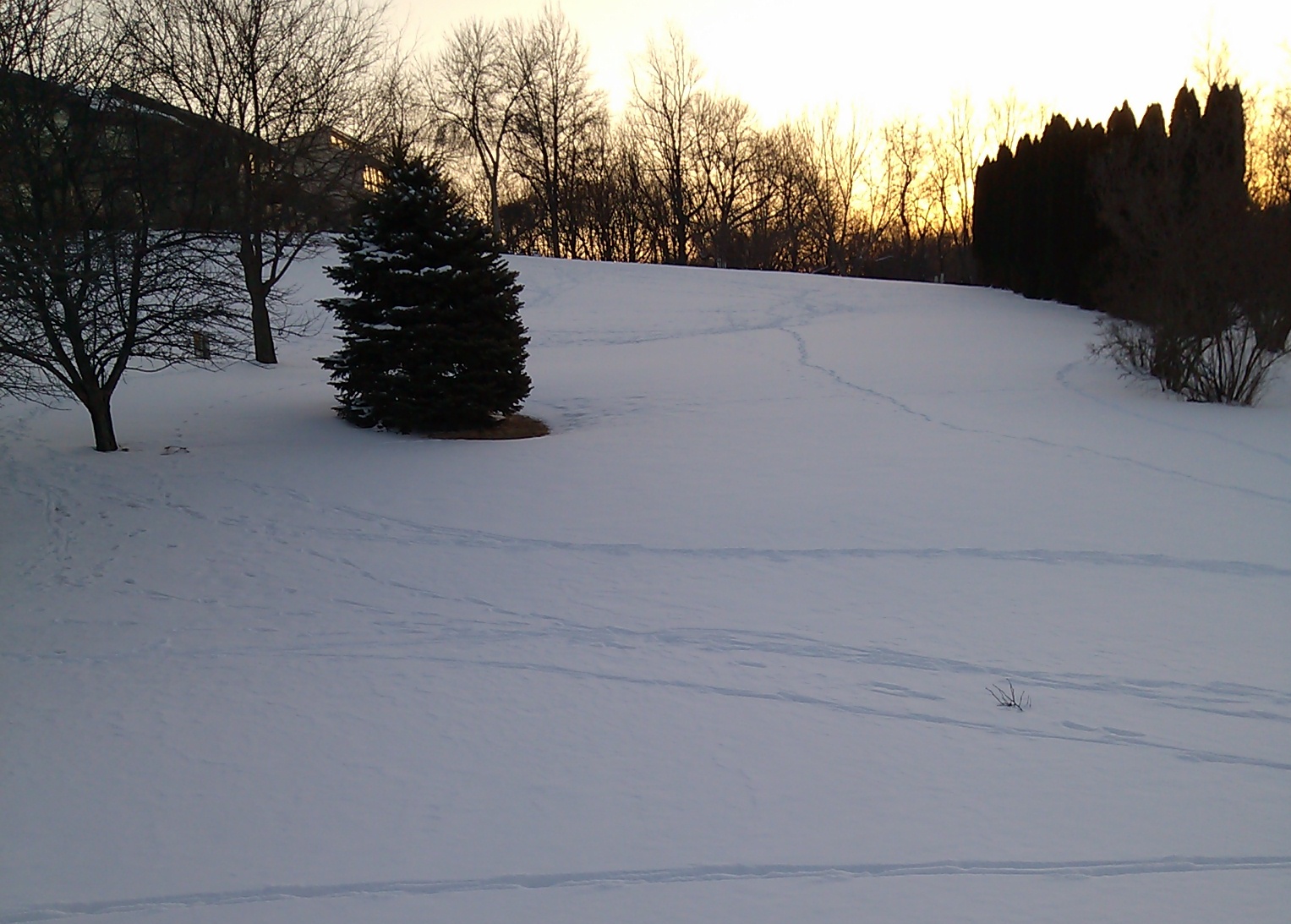
Deer Tracks
Deer Tracks

LAKE MACBRIDE— According to the National Oceanic and Atmospheric Administration (NOAA), January 2014 was the fourth hottest January on record. It was also the 347th consecutive month of global temperatures above the 20th century average. February is expected to be the 348th. From NOAA:

The combined average temperature over global land and ocean surfaces for January was the warmest since 2007 and the fourth warmest on record at 12.7°C (54.8°F), or 0.65°C (1.17°F) above the 20th century average of 12.0°C (53.6°F). The margin of error associated with this temperature is ± 0.08°C (± 0.14°F).

The global land temperature was the highest since 2007 and the fourth highest on record for January, at 1.17°C (2.11°F) above the 20th century average of 2.8°C (37.0°F). The margin of error is ± 0.18°C (± 0.32°F).

For the ocean, the January global sea surface temperature was 0.46°C (0.83°F) above the 20th century average of 15.8°C (60.5°F), the highest since 2010 and seventh highest on record for January. The margin of error is ± 0.04°C (± 0.07°F).

It is too damn hot, said as a resident of earth, located in an extremely cold Iowa winter.