Categories
Sustainability

Nuclear Testing Again?

Trinity Marker near Bingham, N.M.

There is no acceptable rationale for the United States to conduct more nuclear weapons testing. I was surprised when I heard the president took to Truth Social on Oct. 30, to post he had “instructed the Department of War to start testing our Nuclear Weapons…” The president says a lot of crazy stuff, yet I was scratching my head over this one.

The global moratorium on nuclear testing is a mainstay against the dangers inherent in the existence of nuclear weapons. The question should be whether the world can bring a complete end to nuclear testing by ratifying and putting into force the Comprehensive Test Ban Treaty. The president would take us in the opposite direction.

Mine is not the position of a few activists. Literally millions of people, around the globe, have stood up and fought to bring a complete end to nuclear testing.

According to Daryl Kimball of the Arms Control Association, “The journey has been long and difficult, from the citizen-led campaign that prompted Kennedy and Khrushchev to sign the 1963 ban on atmospheric blasts… to the campaign to push Congress to halt testing in 1992… and secure the Comprehensive Test Ban Treaty in 1996.”

Nuclear testing should remain “taboo.” We should resist the president by contacting our U.S. Senators and Members of Congress and telling them so.

No other nation is testing nuclear weapons. Nor should the United States.

~ Submitted as a letter to the editor of the Cedar Rapids Gazette

Categories
Sustainability

Will the U.S.-Russia Extend New START?

B-61 Nuclear Bombs

Oct. 28 marked 100 days until the expiration of the New Strategic Arms Reduction Treaty (New START) between Russia and the United States. Russian President Vladimir Putin said publicly he would like to extend it. President Trump said it sounded like a good idea. We have gone nowhere since. Here is a source for this paragraph from an Oct. 6, Associated Press story. It fills in some details.

MOSCOW (AP) — The Kremlin on Monday welcomed U.S. President Donald Trump’s comments about Russia’s offer to extend the last remaining nuclear arms treaty with the United States, saying it raises hope for keeping the pact alive after it expires in February.

Last month, Russian President Vladimir Putin declared his readiness to adhere to nuclear arms limits under the 2010 New START arms reduction treaty for one more year, and he urged Washington to follow suit. When asked about the proposal, Trump said Sunday it “sounds like a good idea to me.”

Kremlin spokesman Dmitry Peskov welcomed Trump’s statement, noting that “it gives grounds for optimism that the United States will support President Putin’s initiative.”

While offering to extend the New START agreement, Putin said its expiration would be destabilizing and could fuel proliferation of nuclear weapons. He also argued that maintaining limits on nuclear weapons could also be an important step in “creating an atmosphere conducive to substantive strategic dialogue with the U.S.”

The Russian leader reaffirmed the offer Thursday, noting that Russia and the U.S. could use the one-year extension to work on a possible successor pact.

New START is the last major remaining bilateral, U.S.-Russian nuclear arms control agreement.

The president should support a U.S.-Russian agreement to respect New START limits after the treaty expires, then use the time to negotiate a new framework to slash the massive Russian and U.S. nuclear arsenals. Likewise, the parties should call on other nuclear-armed states, including China, to immediately freeze the number of their long-range nuclear launchers. It used to be the case the U.S. would lead.

Will Trump act, put America first, and do what is best for the United States? Who knows? In the meanwhile, tick tock on the last remaining arms control treaty.

Categories
Environment

Electricity Today

Photo by Pixabay on Pexels.com

There is a lot of chatter in the national news media about the price of electricity. We are apparently in a war with China over dominance in artificial intelligence, which requires a lot of electricity. National Public Radio reported, “Electricity prices are climbing more than twice as fast as inflation.” We don’t hear that so much here in Iowa except on national media. Why? According to Bill McKibben, “The average Iowan will spend 39% less on electricity than the average American because it produces 57 percent of its electricity from the wind, the second-biggest wind state in the country.” If you throw solar arrays, and other renewable energy into the mix, Iowa’s total share of renewables is 64 percent.

Spoiled as I am by normally low electricity rates, when last month’s electric bill arrived it was 51 percent higher than the same period last year. What the heck? Although the total amount of the bill was comparatively low — typical for Iowa — I had to look at it.

The price per kWh of electricity from our electric cooperative has been stable and predictable. It wasn’t a rate change that caused our increase. Our monthly usage increased from 429 kWh to 745 kWh. The average American household usage is much higher than that. The reason for higher costs was this increased usage.

What happened? The average temperature increased by four degrees year over year. We likely ran the air conditioner more because of it. It was also oppressively hot this July, which meant spending more time indoors and using more electricity with the washer, dryer, stove and our electronic devices. We also had a millennial house guest for an extended stay. They did online streaming from here with a multitude of electric devices which sucked more juice. In sum, the increase was explainable.

Why are people concerned about increasing electricity costs? Donald J. Trump is president. He does not seem well educated about electricity.

On Trump’s first day in office he declared an “energy emergency” for made up reasons. The unstated reason is he extorted oil, gas and coal companies. “Candidate Trump literally told the fossil fuel industry they could have anything they want if they gave massive contributions to his campaign, and then they did,” according to McKibben. Trump’s payback for the bribe was to hobble the renewable energy industry.

The Trump administration immediately began to do absolutely everything in its power to stop this trend (to develop more sun, wind, and batteries) and replace it with old-fashioned energy—gas, and coal. They have rescinded environmental regulations trying to control fossil fuel pollution, ended sun and wind projects on federal land, cancelled wind projects wherever they could, ended the IRA tax credits for clean energy construction and instead added subsidies for the coal industry. Again—short of tasking Elon Musk to erect a large space-based shield to blot out the sun, they’ve done literally everything possible to derail the transition to cheap clean energy. (Trump is shockingly dumb about (electric) energy, Bill McKibben on Substack).

More than ninety percent of new electric generation around the world last year came from clean energy. This was not because everyone in the energy business had “gone woke,” McKibben wrote. Texas, arguably the most un-woke place in the U.S., installed more renewable capacity than any other state last year. It was because you could do it cheaply and quickly—we live on a planet where the cheapest way to make power is to point a sheet of glass at the sun.

I don’t know what happened to Republicans. Senator Chuck Grassley used to be one of the big supporters of wind energy in Iowa because of the way wind turbine arrays meshed with farm operations, giving a farmer another revenue stream.

Under Trump we have taken a step backward and let China, Europe, and literally everyone else take the lead in developing the electricity of the future which taps power directly from the sun.

We can and must do better than this as we consider our energy future.

~Written for Blog for Iowa

Categories
Environment

Republicans And The Damage Done

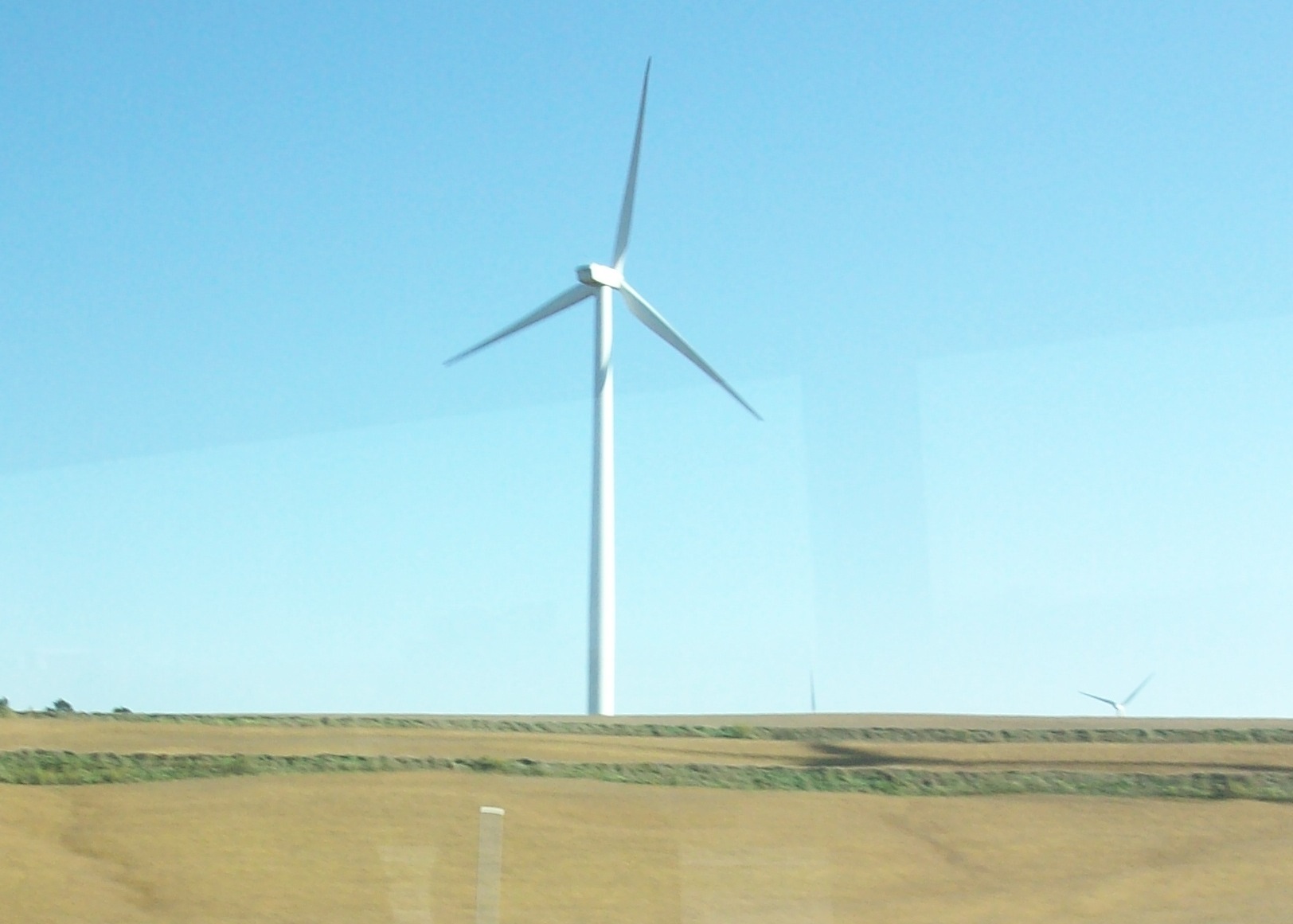
Iowa Windmill

When I visited the Iowa legislature, one of the people I sought was Rep. Chuck Isenhart from Dubuque. Almost every bill regarding conservation, climate change, renewable energy, and water quality involved him in some way. We were sad to see him lose his last election. Since then, Isenhart has been staying active including writing about environmental issues on Substack.

Why would our national legislators back away from clean energy? Isenhart has some thoughts.

“Just because our gardens are growing cucumbers doesn’t mean we have to make pickles,” Isenhart wrote. “Backing away from clean energy while continuing to subsidize fossil fuels and mandate biofuels puts us in a pickle, making even the wildest dreams come true for those who advocate for an “all-of-the-above” energy future (meaning ‘don’t leave fossil fuels behind’).”

In an Aug. 18 post, Isenhart outlines the damage done to renewable energy programs by Republicans. He starts with his personal story of installing solar panels on his roof and what a good deal it was for him, the utility company, and the environment. The story arrives here:

So – good for consumers, good for business, good for workers, good for the environment. Win-win-win-win. Thus, good for government to keep promoting, no?

Ahhhhh, no. Iowa’s Congressional delegation voted unanimously to unravel most of the federal government’s support for clean energy. Your chance to use the incentive I did is fast running out.

The federal tax credit program for residential solar, wind, geothermal and battery storage now expires at the end of this year, not 2034 as originally planned.

Churches and non-profits with big energy bills can also still get in on the deal through the Elective Pay program with the up-front help of donors who like to see tangible returns on investment like this church.

In related news, Iowa’s congressional representatives Ernst, Grassley, Hinson, Miller-Meeks, Nunn, Feenstra also eliminated the energy efficient home improvement credit (December 31), the new energy efficient home credit (June 30, 2026) and the energy efficient commercial buildings deduction for property construction that begins after June 30, 2026. All of these serve to reduce energy consumption and climate impact. (The Sun Also Sets by Chuck Isenhart on Substack).

We may know how bad Republicans are with advances in renewable energy and the environment. Isenhart lays it out with specifics. Read his entire post here.

~Written for Blog for Iowa

Categories
Sustainability

Remembering Hiroshima and Nagasaki

Hiroshima, Japan after U.S. Nuclear Attack. Photo Credit: The Telegraph

The anniversaries of the U.S. atomic bombing of Hiroshima (Aug. 6) and Nagasaki (Aug. 9), found me without useful things to say. Enter President Trump on July 25, “(New START is) not an agreement you want expiring. We’re starting to work on that.” He added, “It’s a problem for the world when you take off nuclear restrictions, that’s a big problem.” This from the president who dismissed the New START arms control treaty between the U.S. and Russia as too favorable to Russia during his first term in office.

Talk is cheap. Despite Trump’s statement, no plan or policy to reduce nuclear arms has emerged, according to Daryl Kimball of the Arms Control Association. The president spoke with Russian President Putin at least six times this year. According to call readouts, the topic of nuclear arms control was not broached. Meanwhile, the recently passed budget reconciliation calls for almost $1 Trillion in nuclear complex spending.

Without clear and sustained efforts by world leaders to prevent nuclear war, our luck in avoiding one may run out.

My worries about nuclear attacks began as a child. Gathered with family in the backyard, we watched the Soviet satellite Sputnik fly over. If they could launch Sputnik, could they send a nuclear bomb to Iowa? In school we performed drills on what to do in the event of a nuclear attack. Today we pray the president will stop talking about nuclear arms control and do something. It is an open question whether he will.

~ First published by the Cedar Rapids Gazette on Aug. 3, 2025.

Categories
Environment

Summer Life

On the state park trail.

There is a lot going on this summer. Here are some snapshots from my activities.

Categories
Sustainability

Nuclear Energy Revisited

Photo by Ilya Perelude on Pexels.com

On July 1, Interstate Power and Light Company, the parent company of Alliant Energy, filed an application to add 1,000 megawatts of wind energy “to help boost Iowa’s electric grid and further diversify its energy portfolio,” Olivia Cohen wrote in the Cedar Rapids Gazette. The timing of the filing takes advantage of tax credits included in the Inflation Reduction Act before they change as a result of the budget reconciliation bill enacted this month. This project seems like a good deal for everyone.

What we don’t see is applications to construct new nuclear reactors to generate electricity. There has been a stream of media articles about pulling the Duane Arnold Energy Center in Palo out of mothballs and bringing it on line again. There is an exploratory committee for that purpose. In addition, the Linn County Supervisors have undertaken to establish a nuclear zoning code for parts of the compliance not preempted by federal authorities. These are not real solutions to meet energy demand.

I wrote before, “The technology at Duane Arnold is old. The physical plant is old. Its permit has been renewed twice. There is a limit to the life of these facilities built in the 1970s. Why throw new money after old technology? We shouldn’t.” If we do anything regarding nuclear power generation, we should wait until known problems have been resolved. That is one of Bill Gates’ current projects. Gates appears to rely heavily on government subsidies for his small modular reactor in Wyoming.

Why even consider nuclear energy? I knew why when I was a kid back in the 1950s and ’60s after President Dwight Eisenhower’s Atoms for Peace speech at the United Nations General Assembly on Dec. 8, 1953. Eisenhower sought to solve the terrible problem of splitting atoms in nuclear weapons by suggesting a means to transform the atom from a scourge into a benefit for mankind. Follow this link for the text of the Atoms for Peace speech. That idea had its heyday. That time is over.

Even Iowa is getting in the act with Governor Reynolds’ Nuclear Energy Task Force created via Executive Order to make recommendations for how we can move forward with nuclear energy in Iowa. The task force was just formed, so we don’t know the direction they will take. Well, we do. There is only one game in town. Generate nuclear powered electricity using government subsidies to offset the high costs which render the idea a non-starter as a stand alone business proposition.

Today our government wants nuclear weapons and nuclear power for the express purpose of making money for contractors and their wealthy owners. Profits are to be propped up by government subsidies. The message, clear in the Alliant Energy application, is government subsidies for green energy are coming to an end under the current administration. Why not phase out and end the subsidies for nuclear power and fossil fuel companies as well? We know why. The government has been captured by these energy industries.

Society has not begun to tap the potential of wind and solar energy. When the issue of storage is solved, the two methods of electricity generation should just take off. It is up to us to resist a resurgence of nuclear power and allow wind and solar to take market share. Based on what is happening now in Europe, they will. The United States has chosen to service oligarchs and large corporations in its energy policy. We should lead rather than do this and fall behind.

Categories
Environment

Wildflowers – July 2025

Trail walking.

My words can’t compete with the beauty of a hike along the state park trail.

The trail toward home.
Categories
Sustainability

Clean Energy Future

Photo by Pixabay on Pexels.com

If a person doesn’t believe an industry can capture the U.S. government, they haven’t been paying attention. The proposed rescission of congressionally approved funding for clean energy projects, combined with the omnibus reconciliation bill endeavor to strip away any government support for wind and solar generated electricity, electric vehicles, and more. The same moneyed players are at work here to retard progress toward a clean energy future: the fossil fuels industry.

Former Vice President Al Gore of the Climate Reality Project shared his thoughts on the regressive Republican policies:

We don’t have any time to waste if we want to solve the climate crisis in time to avert the truly catastrophic impacts that can still be prevented. But dangerous delay – which is the new “climate denial” – is exactly what Congress has done by repealing the clean energy provisions of the IRA: wasting time we don’t have by trying to prop up the fossil fuel industry while the world burns. 

Make no mistake, the clean energy transition will continue in the United States despite these efforts – our direction of travel is clear. 

But by prioritizing the fossil fuel industry over true climate solutions – even forcing taxpayers to add yet more subsidies for large oil and gas companies – our leaders are shirking their responsibility to the American people and ceding leadership in the global economy to China, Europe, and others who are embracing the many benefits of a clean energy future. (Statement by Former Vice President Al Gore on the Budget Bill, The Climate Reality Project, July, 3, 2025).

Gore is right. An obvious truth is that if the United States steps back from what once was robust governmental support for clean energy, there are two consequences. The domestic transition from fossil fuels to solar and wind powered energy will continue. The course is set, despite hobbles the fossil fuel captured Trump administration tries to attach to it. Second, if the United States doesn’t want to lead, China, Europe and others will, putting our country at a competitive disadvantage.

Last Wednesday, Reuters reported, “Solar power was the European Union’s largest source of electricity for the first time in June, overtaking nuclear and wind while coal’s contribution fell to an all-time low, data from energy think tank Ember showed.” The next challenge for Europe’s power system is expansion of battery storage and grid flexibility to reduce reliance on fossil fuels when the sun doesn’t shine and the wind doesn’t blow, according to the article. The U.S. should be leading this energy transformation instead of ceding it to other countries.

The future is ours if we will grasp it. Despite Republican efforts to stop the clean energy transition, progress will continue, only this time with the United State playing catch up.

Categories
Sustainability

Today’s Nuclear Times

Iranian President Mahmoud Ahmadinejad visits the Natanz nuclear enrichment facility April 8, 2008 Photo Credit: Reuters

I remember watching one of the Soviet Sputnik satellites flying over the back yard of our Iowa home. Besides launching a “space race” between the United States and the Union of Soviet Socialist Republics, Sputnik heightened tensions between the two countries over potential use of nuclear weapons. Back in the 1960s, we graders practiced school drills for a nuclear attack. This period of competition became known as the Cold War. To this day, the U.S. and Russia own most of the nuclear weapons that exist. The NASA website makes a point:

The Sputnik launch changed everything. As a technical achievement, Sputnik caught the world’s attention and the American public off-guard. Its size was more impressive than (the U.S.) Vanguard’s intended 3.5-pound payload. In addition, the public feared that the Soviets’ ability to launch satellites also translated into the capability to launch ballistic missiles that could carry nuclear weapons from Europe to the U.S. Then the Soviets struck again; on November 3, Sputnik II was launched, carrying a much heavier payload, including a dog named Laika. (NASA website).

Our life of living with nuclear weapons changed dramatically since Sputnik. The public is vulnerable to being caught off guard again because few are paying any attention to nuclear weapons proliferation. Last year, Annie Jacobsen published Nuclear War: A Scenario, which provided an update on where the country stands regarding our nuclear weapons complex. Jacobsen’s work is part of the picture.

Our compliance with the Nuclear Non-proliferation Treaty, which commits all parties to negotiate in good faith on effective measures relating to the cessation of the nuclear arms race, nuclear disarmament, and general and complete disarmament, is at a stand still. The story of how that happened is less interesting than the diversion from this core compliance issue caused by attention to North Korea and Iran’s development of nuclear technologies. It avoids the basic question of when will the U.S. and Russia comply with Article Six of the treaty?

Daryl G. Kimball, Executive Director of the Arms Control Association, addressed the recent bombing of Iran by Israel and the U.S. He argues, “U.S. President Donald Trump’s decision to join Israel’s illegal military attacks against Iranian scientists and safeguarded nuclear sites represents an irresponsible departure from his earlier pursuit of diplomacy. It will increase the risk of a nuclear-armed Iran and erode confidence in the nuclear nonproliferation system.”

The nuclear deal that Trump unilaterally abandoned in 2018, the Joint Comprehensive Plan of Action (JCPOA), imposed limits, prohibitions and intrusive inspection requirements on Iran that were to last for 10 or 15 years, with some being permanent, Kimball wrote. He expressed hope that the negotiating framework can still be salvaged, even if it has been severely damaged by this year’s U.S. military operations in Iran.

In the meanwhile, the U.S. government continues to spend hundreds of millions of dollars on our nuclear complex. We don’t hear much about that, except when it’s federal budget time. Ann Suellentrop, vice chair of the PeaceWorks Kansas City board and a member of the Physicians for Social Responsibility Board, noted in the Kansas City Star, “Kansas City’s nuclear bomb parts plant is ramping up significantly.” She provided details:

There is a new federal government plan to increase production of plutonium pits — the trigger that starts the bomb explosion in nuclear weapons — to 80 pits per year in each of the next 50 years. This is in comparison with the current production of fewer than 30 per year. The sites that are supposed to work together on what amounts to a new nuclear arms race include Kansas City’s federal nuclear bomb parts plant, managed by Honeywell Federal Manufacturing & Technologies. That is the Kansas City National Security Campus located in the south part of the city. The recent allocation of taxpayer funds for this National Nuclear Security Administration site reveals a huge jump from the 2025 budget from $1.3 billion to $1.7 billion in 2026. The plant is now doubling in size as it produces electrical and mechanical parts for seven new nuclear weapons programs simultaneously. (Kansas City Star, July 9, 2025).

Despite the efforts of Suellentrop and others, the nuclear weapons spending issue gains little media traction. “We need a mass movement of people to speak up and hold the government accountable,” Suellentrop said. The fact is we need a mass movement to speak up and hold the government accountable in many areas. If such a thing exists, it hasn’t ramped up fast enough.

The irony with the war between Israel and Iran is we appear to be returning to the days of Sputnik. Joe Cirincione recently opined, “we look at the unintended consequences of this 12-day war: the risk of dragging us back to the nuclear anarchy of the 1950s, when many nations — friends and foes — sought nuclear weapons.” The 1950s may be a fond memory for some of us. We definitely don’t want to go back, especially as it pertains to proliferation of nuclear weapons.