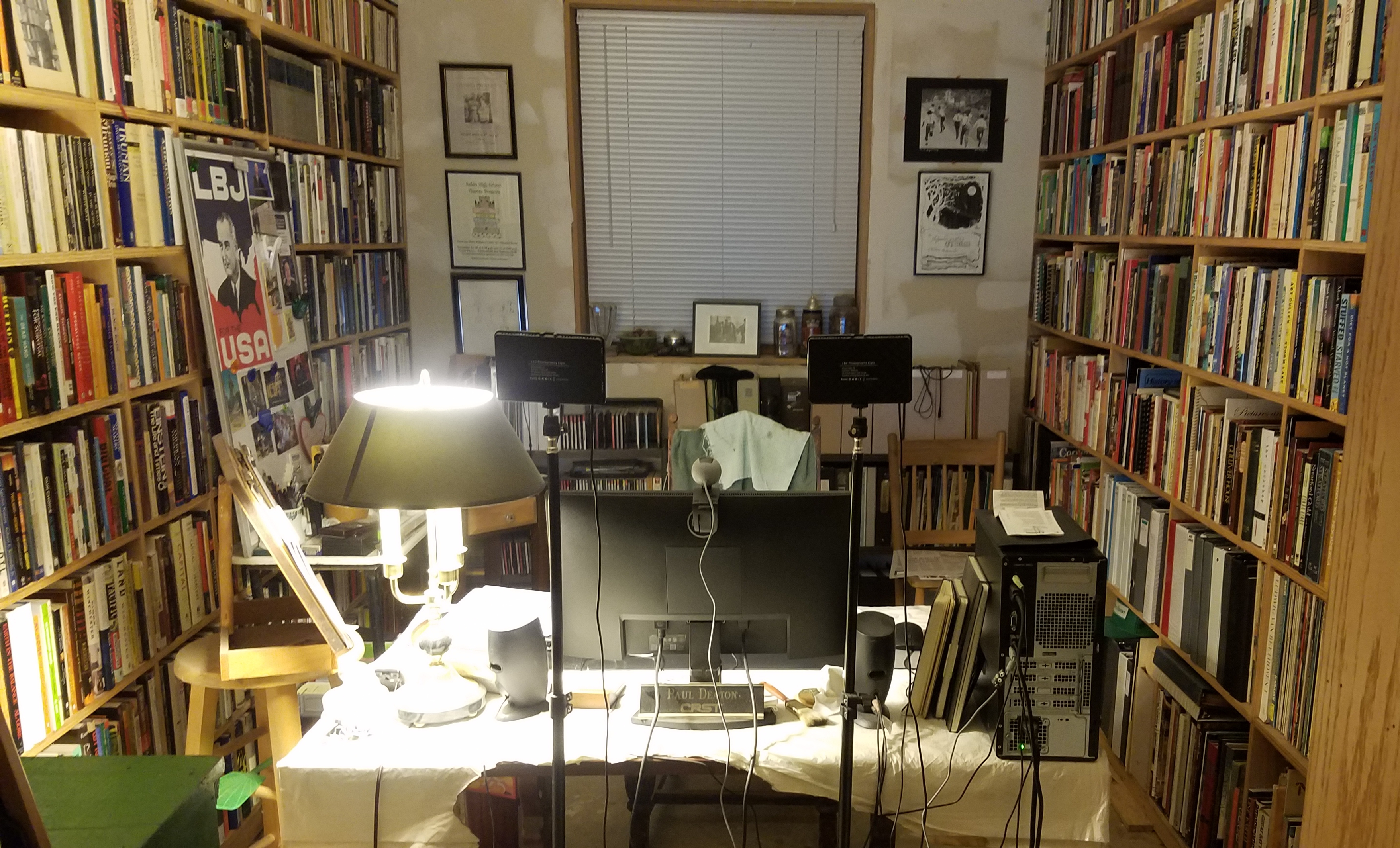
A library is curated, which means it inherently contains the biases of the librarian or curator. How will books be organized? When space is at a premium, which go to a thrift shop and which go into a box for potential future use? Which books should be acquired and which checked out of a library? I have a lot of books — a few thousand in my writing room alone. My collection of books, papers and other media is idiosyncratic. That’s as it should be. The meaning of the collection goes little further than the door through which I took this photo. My library mostly serves my writing.
As winter approaches, the pace of my reading increased. I’m reading about 50 pages a day and more if the text is engaging. Since the coronavirus pandemic began I read an average of 58 books each year. A recent Gallup poll found Americans started 12.6 books per year and finished five of them on average. This chart from the poll tells the story that reading books in America is in decline:

When I retired during the pandemic I adopted a firm rule that no matter what, I’d read at least 25 pages per day. This is harder when garden work is in full swing, and easier when I’m more home bound in winter. What I didn’t plan is how to curate the books and papers accumulated since the 1950s. Curation includes acquisition and disposal, two skills I haven’t practiced with consistency in decades.
I used to buy books at thrift shops and yard sales, but I haven’t been to one of those in years. I do buy new books, mostly based on recommendations from people I know on social media or related to my writing projects. The whole thing is hodge-podge and it shows.
Work on my autobiography energized the curating process. In addition to telling my story, writing includes going through possessions the way a Forty-Niner panned for gold in the California Gold Rush. The yield has been more than a few good nuggets.
In addition to preparing a bound book, I hope to reduce possessions by 75-90 percent. You can’t take it with you and our millennial child may never be able to afford a house. Nor would I want them to accept and store all my stuff. When they visit, we discuss what is of interest and what is not. It is a recurring thing we do that I enjoy.
Who knows when I’ll need to refer to a 1920s book titled Rural Sociology? I want to be able to find it when I do. Will I ever need to refer to my facsimile of the 1771 edition of the Encyclopaedia Britannica? With Google I likely won’t need it to gather information, yet there are reasons to keep it… idiosyncratic ones. Should I keep my copy of Charles and Mary Beard’s The Rise of American Civilization, purchased at the local library used book sale to which it was donated by the estate of Alexander Kern? Kern was one of the first American Studies professors in the program in which I matriculated. His more important papers reside in the University of Iowa Special Collections. Don’t get me started on the problems with the Beards’ book. I feel I should keep it just for those issues.
Using the verb to curate is not likely the intended use for what I do with my collection of stuff. Cataloguing the books is out of the question. Like most people, I seek truth and meaning in my life. Part of that is dealing with too many books, papers and media by making something of them the way my forebears mined coal. I want a work product both recognized and useful to others.
Based on the numbers in the Gallup Poll, I’m different from most Americans when it comes to reading and collecting books. I’m okay with being different.
 Journey Home
You must be logged in to post a comment.