Categories
Living in Society

Rita Hart Withdraws Election Contest

Rita Hart

Readers have commented about my posts on the super close race in Iowa’s Second Congressional District. Today, Rita Hart withdrew her contest of the election results. Here is her campaign press release.

FOR IMMEDIATE RELEASE

March 31, 2021

Rita Hart Statement on IA-02 

WHEATLAND, Iowa — Today, Rita Hart released the following statement: 

“After many conversations with people I trust about the future of this contest, I have made the decision to withdraw my contest before the House Committee on Administration. Since Election Day, and throughout this entire process, my mission has been about ensuring the voices of Iowans who followed the law are not silenced. I am saddened that some Iowans’ votes will not count through no fault of their own. The work of ensuring it does not happen again will continue beyond this campaign. 

Despite our best efforts to have every vote counted, the reality is that the toxic campaign of political disinformation to attack this constitutional review of the closest congressional contest in 100 years has effectively silenced the voices of Iowans. It is a stain on our democracy that the truth has not prevailed and my hope for the future is a return to decency and civility. 

I wish Mariannette Miller-Meeks all the best as she serves the people of this great state as Congresswoman. This has been a difficult process for all of those involved and it’s incredibly important that we work together to reform the system so this does not happen again in the future. 

Running to represent the people of Iowa’s Second Congressional District in the U.S. House of Representatives has been one of the greatest honors of my life. I got in this race to listen to the people of the district and bring your voices of common sense and decency to Washington, D.C. We must work to end the partisan gridlock and deliver for the working people in Iowa who are struggling to make ends meet. 

To those who invested in this campaign — donating a few extra dollars they could spare or volunteering time — and to ALL of my supporters, my campaign team, and to my family, my children and grandchildren, and especially my husband Paul, thank you so much for your hope and passion. I could not have persevered on this journey without your tireless dedication and commitment.

I am a life-long Iowan and I will always work for a more prosperous future for our children and grandchildren. That won’t change regardless of this, or any, election. We have so much more to work for. I hope you all will stay involved and join me in working to make Iowa a better place for all.”

Categories
Living in Society

Whose Blood is Curdling?

Woman Writing Letter

I read with interest Bruce Gelder’s March 27 letter about the Miller-Meeks-Hart election. Couple of things:

The idea Rita Hart would “roll the dice,” like at a craps table at a casino, is laughable. As she repeated, the Iowa process allowed inadequate time for effective consideration. Pursuing a recount of Iowa’s Second District in the U.S. House of Representatives is legal.

The U.S. Constitution is clear. Article I, Section 5 says, “Each House shall be the judge of the elections, returns and qualifications of its own members.” The Federal Contested Election Act of 1969 identified a procedure for close races like this one. Scores of contested elections have been pursued in the House.

Hart’s appeal sets no precedents, as Gelder suggests. Any chaos being created is from a Republican noise machine expressing their perceived mistreatment. It’s like Democrats shouldn’t be given consideration because Republicans believe they won the election and that should be that.

The majority of election contests pursued by the House were dismissed. To gain consideration, the state must first certify results. The only “blood curdling” is occurring in Republican veins. They wish Democrats would just go away and not insist on our rights. That’s not likely.

Published in the March 31, 2021 edition of the Iowa City Press Citizen

Categories
Living in Society

My Politics Addiction

Lake Macbride, March 26, 2021.

Former Secretary of State Mike Pompeo appeared at the Machine Shed Restaurant in Urbandale Friday morning, kicking off the 2024 Iowa Republican presidential nominating contest. He didn’t stop to speak to the press.

Republicans said they would hold a 2024 precinct caucus as usual regardless of whether Democrats do. A majority of Iowa Republicans favor Trump 2024 according to recent polls.

For his part, Joe Biden said he plans to run for a second term at his inaugural press conference last week.

Bloomberg reported U.S. cases of COVID-19 are rising again. It’s still bad in Iowa. Maybe it’s due to events like Urbandale where people gathered in public without social distancing or masks. The crowd looked pretty old and mostly male. Maybe they are all vaccinated, he laughed. News photos depicted what appears to be an aggregation of various daily coffee gatherings that occur around the state among retired and mostly male locals. Seeing Pompeo was something different to do, I suppose.

These days I have limited interest in politics. We are living in a time of Republican dominance in Iowa and I have no interest in watching the horror show. Yet I’m drawn to it… political stories in newspapers and on Twitter. One supposes I have an addiction. I don’t seem motivated enough to beat the addiction…yet. Likely, I’m in denial.

Part of my addiction is isolation resulting from the continuing coronavirus pandemic. In isolation, every human contact takes on increased importance. In normal times, it was easier to select which issues to work on and which to leave to others. Pandemic-caused isolation makes ridding myself of the addiction more complicated.

I intend to continue to vote, and will likely donate a few dollars to good candidates when I can. Anymore, political engagement is mostly determining whether a candidate is a Democrat. Advocacy has been co-opted by national players and the federal judiciary is in process of re-making the assumptions upon which my advocacy was once predicated.

Like anyone, I will try to help my local candidates. I can’t go cold turkey from politics. At the same time, I expect to get better focused on a handful of issues I deem most important. Readers of this blog know it’s the environment and its biggest threats: a warming plant, nuclear war and armed conflict.

There are many factors, physical, mental, emotional, and biological that make quitting politics difficult. It’s the rural Virginian in me that keeps me engaged. A low level dosage won’t cure me yet like the COVD-19 vaccine, it may inoculate me from the distractions that are possible. I should lean on my Polish ancestors who just came here, went to church, and made a life.

In any case, I’m addicted to politics and can’t let it dominate my life.

Categories
Living in Society

Politics Takes No Holiday

Curing Yukon Gold seed potatoes, 2021.

The election contest in Iowa’s Second Congressional District is expected to continue until July, according to Marc Elias, counsel for the Rita Hart campaign during a March 23 press conference. By then the term will be 25 percent finished, and today, it is unclear whether the votes to seat Hart in the U.S. House of Representatives will exist after the House Administration Committee finishes its work.

According to Elias, and this is not new, there are 22 legally cast, uncounted votes, Mariannette Miller-Meeks acknowledged publicly such votes exist, and there should be a fair process to count them. The Miller-Meeks position is the election has been certified by the State of Iowa, Hart skipped the Iowa court system in pursuit of an appeal, and that should be that.

Miller-Meeks is not voting the way she should on most issues. She did vote for the Violence Against Women Act, unlike other Republican members of Iowa’s congressional delegation. She has been against many other Democratic priorities, including HR-1, the For The People Act. Because she was seated in the Congress, she is free to vote how she will. That doesn’t mean we have to like it, and it sustains my interest in Hart’s election contest.

Hart’s appeal is not like Trump’s legal cases, at all. Hart’s position from election day has been that all legally cast votes should be counted. A key issue is that in no other contest arising from the 2020 election have Democratic attorneys denied Republicans (i.e. Trump) had a right to make a contest. Miller-Meeks first action was a petition for dismissal of Hart’s contest. Consideration of the petition was deferred by the committee chair and that led us to Monday’s filings and yesterday’s press briefing.

Incumbency is powerful, even for Miller-Meeks who began her term in January. Because of that, she gained a sense of authority that has been respected by her peers and by members of the news media. I keep reminding folks Miller-Meeks’ appointment was provisional. That, however, gets sanded off in the woodshed of daily political reporting.

Seven members of the media asked questions during the press conference. The nature of questions reflected the media narrative that has been and continues to be woven more than facts of the contest.

Nicholas Fandos of the New York Times asked about Hart’s decision to bypass the Iowa Court system to take the contest to a partisan U.S. House of Representatives. I’m losing track of how many times the Hart campaign has explained this, beginning in November 2020. Fandos also asked Elias if there was a conflict of interest issue because he represented some members of the House Administration Committee in other cases. I thought that was a pretty good question until I heard Elias’ answer: “It’s nonsense. I don’t represent the House Administration Committee. I represent Rita Hart. Everyone knows that. There is not some secret going on there. I’m handling this like any other case.”

Every member of news media who spoke had some narrative to support. While news media maintains an obvious bias, and we expect them to have a narrative to dumb down stories for readers and viewers, it’s unfortunate and tedious when we have to spend our time arguing with media rather than paying attention to the facts of a case.

We knew, based on history, that a contested federal election would take time to resolve. We also knew most of such cases brought to the Congress were dismissed. The problem for Second District Democrats is whoever is the candidate for the Congress in 2022 needs to be working this summer and the Hart-Miller-Meeks contest may not be resolved by then.

If Hart wins the contest and is seated in the Congress, incumbency will play a significant role in 2022. However, if the contest is dismissed, or if it is pursued and the whole House rejects it, we’ll be behind the eight ball. Pursuing this election contest puts Democrats in a difficult situation as we prepare for the 2022 campaigns.

I support Hart’s contest in the House Administration Committee with the opinion we should count all the votes and let chips fall where they may. In the meanwhile we have to hold Mariannette Miller-Meeks to account for her terrible voting record. That’s something we did before and will pursue going forward. I suspect Second District Democrats can multi-task as long as we know that’s what we are doing.

Categories
Living in Society

Count All the Votes

Rita Hart

Provisional Congresswoman Mariannette Miller-Meeks accused Rita Hart of choosing politics over the law in pursuit of an appeal to the certified results of the 2020 general election for Congress. That is ridiculous.

The law that covers the close race is the Federal Contested Election Act of 1969, and both candidates have been complying with it. It’s a given that this election contest is political. It’s about a close political election for Pete’s sake.

Rita Hart’s case hasn’t changed since she made the appeal: There are legally cast votes not counted. Count every vote.

The reason Miller-Meeks makes an accusation is to divert our attention from due process. She is justifiably concerned about losing her provisional seat if Rita Hart wins the appeal and replaces her in the Congress to represent Iowa’s Second Congressional District. If the U.S. House Administration Committee finds legally cast votes were not counted, as Hart did, and those votes show Hart won the election, she should be sworn into office. Just because there is hysterical Republican fear doesn’t mean the challenge should be withdrawn, or is somehow suspect.

The election was close. While the governor signed certification of the six-vote win for Miller-Meeks, there was no mandate from the electorate. She did not have a plurality. Now that Miller-Meeks’ call for dismissal of Hart’s appeal was rejected by the committee, the process should continue until its natural end. The next deadline is Monday, March 22, when briefs are due to the committee.

Senators Chuck Grassley and Joni Ernst issued a joint statement in which they assert Hart’s appeal is not legitimate. Here it is, but it is snake oil. Don’t swallow it!

Both the original vote count and recount confirmed Mariannette Miller-Meeks won her election. There are legal avenues through which candidates can litigate election disputes if they believe there are specific election irregularities. Rita Hart declined to take legitimate legal action in Iowa courts and instead chose to appeal to Washington partisans who should have no say in who represents Iowans. That’s an insult to Iowa voters and our nonpartisan election process. We are confident in the fairness and accuracy of Iowa’s election system.

In addition to Iowa’s U.S. Senators, a cast of the usual characters has been speaking on Miller-Meeks’ behalf. Among those who made public statements are Paul Pate, Kim Reynolds, Randy Feenstra, Tom Cotton, and former United Nations ambassador Nikki Haley. Miller-Meeks took her case to FOX News chat hosts Bret Baier and Laura Ingraham recently. The Republican outrage is universal.

Miller-Meeks also made a well-publicized trip to the U.S. – Mexico border to decry a “crisis” there. Not so fast!

Miller-Meeks told Radio Iowa on Monday that people should be outraged. I’ll tell you who has no reason to be outraged by Rita Hart’s pursuit of an appeal, it’s the half of the electorate who voted for Hart.

The Republican noise machine has been refined in recent years to dissemble, distract and mislead citizens when they don’t like what they see in society. The fact remains Miller-Meeks’ election was certified by the Iowa Governor as winning by six votes. Even if the House Administration Committee finds Hart won and flips the election result, the main point here is the election was exceedingly close. Neither Hart nor Miller-Meeks should be doing much celebrating.

I’d like to see Hart seated in the Congress. I have also been around Iowa politics long enough to realize a close election can easily turn the electorate that produced it. It could go either way.

In Marc Elias, Rita Hart hired one of the best attorneys in the country to represent her during the appeal. Democrats who seek to put Hart in the Congress for more than the remainder of the current term should be focusing attention on the 2022 general election. I predict that election won’t be close.

Click here for a news update from the March 20, 2021 Iowa City Press Citizen.

Categories
Living in Society

Politics in the Biden Administration

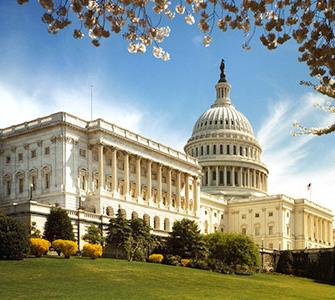
U.S. Capitol, Washington, D.C.

I wrote four posts tagged politics since Joe Biden and Kamala Harris were inaugurated. I feel we are in a new time, where politics matters less than other parts of society.

The longest piece was a dirge about losing a sense of community I barely got to know before it vanished. There were also two book reviews and a letter to the editor of the newspaper. Compared to where this blog has been in 14 years, that’s not many political posts.

In the early days of the Biden administration something has changed about our politics. I can’t determine what it is. Our politics continue to matter and the slim majority Democrats hold in the Congress will likely pass the first major bill later today in the American Rescue Plan Act. The Senate passed it already and House Democrats say they have the votes.

Yesterday 13 non-controversial bills were pulled from the docket in the U.S. House. Rather than passing them on a voice vote in quick succession, a Republican asserted their privilege and called for a roll call vote on all of them. I’m not sure the purpose of this stunt which irritated both Republicans and Democrats. The roll calls would have delayed the vote on the American Rescue Plan Act and House Democrats would have none of that.

Biden’s history as Barack Obama’s vice president shows. He’s taking no quarter with malarkey. While Obama beat Biden by signing the American Recovery and Reinvestment Act on Feb. 17, 2009, 27 days after inauguration, negotiations for the Patient Protection and Affordable Care Act took a year by the time Obama signed the law on March 23, 2010. The lesson Biden learned from Obama was a new president does not have that kind of time to spend on a single bill. When we are a year into the Biden-Harris administration, the window of opportunity to pass substantial legislation may well be over. Biden appears to have taken the Rev. Dr. Martin Luther King Jr.’s words to heart:

We have also come to this hallowed spot to remind America of the fierce urgency of now.

This is no time to engage in the luxury of cooling off or to take the tranquilizing drug of gradualism.

Now is the time to make real the promises of democracy; now is the time to rise from the dark and desolate valley of segregation to the sunlit path of racial justice; now is the time to lift our nation from the quicksands of racial injustice to the solid rock of brotherhood; now is the time to make justice a reality for all of God’s children.

It would be fatal for the nation to overlook the urgency of the moment.

March on Washington Speech, the Rev. Dr. Martin Luther King, Jr. Aug. 28, 1963

Changed politics during the Biden Harris administration is a feature, not a bug.

Categories
Reviews

Book Review: Our Time Is Now

If one needs a palate cleansing after the bitter taste of the Trump years, Stacey Abrams’ Our Time is Now is just the book to read.

I didn’t know what to expect going in. I knew of her close Georgia gubernatorial race in 2018. I followed the Georgia U.S. Senate runoff elections last month and knew she played a role in voter turnout after declining to be a candidate herself. If anything surprised me about the book, it was how timely is Abrams’ message as the Biden-Harris administration gets to work.

There are some key takeaways:

She emphasizes the importance of counting everyone during the U.S. Census. Undercounting the poor, persons of color, and other disenfranchised U.S. residents serves to further disenfranchise them. President Trump attempted to politicize the U.S. Census. President Biden reversed Trump’s executive actions and seeks to give the Census Bureau needed time to make the best count possible. That means a delay in states receiving information required for their decennial re-districting process. Biden knows what Abrams suggested: the U.S. Census is important to restoring political power to people.

Abrams emphasizes that people should vote. She also criticized the voter targeting methods use in the 2016 and 2018 Democratic campaigns. Voter registration continues to play a key role in citizens gaining political power. It goes without saying voting does as well. The conclusion I drew from the book was that no voter should be ignored during campaigns.

The book refreshes our collective memory about voter suppression efforts by Republican lawmakers. Abrams’ story was she overcame systemic voter suppression during her Georgia gubernatorial campaign by the sheer number of new voters they activated. The permanent solution is for voters to take control of the electoral process by electing more Democrats at every level. With Democratic control of state legislatures, it is less likely voters will be suppressed.

As a child I learned the importance of civic engagement. Unlike most Americans today, I study the issues and candidates, and vote in every election. I don’t know what happened yet we need to return to that basic tenant of governance. If we seek to retain government by the people, participation is required. That is Abrams’ message.

I read a lot of political books and Abrams’ book is well-written and relatable. If we seek to move our country forward, elect more Democrats. Stacey Abrams has provided a roadmap in Our Time is Now.

Categories
Living in Society

Why Politics is Less Fun

Google Earth clip of Lincoln County, Minnesota.

Depending upon which family tree one ascends, I am fifth generation American. The line descends from Prussia near Poznan during the late 19th Century partition of Poland. American politics was not as high on the list of priorities in 1883 when great great grandfather bought land.

An account of the funeral of the first Polish immigrant in Lincoln County, Minnesota says who we are as well as anything.

The first death that occurred after the Wilno Poles arrived “out of the wind,” as Róza Górecki had put it, was an occasion not only to mourn the deceased, but also to reflect on being buried in an alien land, far from the graves of friends and relatives. The funeral of Anna Felcyn (who died leaving several small children) in 1886 featured a procession with 30 wagons. Beginning at her home at 8 a.m. and proceeding past nearly every farm in the community, the procession lasted for six hours before reaching the church. Everyone stopped work for the entire day to attend the funeral Mass. A final procession to the cemetery — nothing more than a plot of land set in the vastness of the wind-swept prairie — ended in a graveside sermon by the pastor that was so emotional that all present — men, women and children — were moved to tears.

Poles in Minnesota by John Radzilowski

What stands out in this story is the sense of community. It takes a commitment to each other to make a six-hour funeral procession to the church. Over the years, these Minnesota Poles stuck together in numerous ways. After the turn of the century, the community advocated for Polish independence and for U.S. Government aid for their struggling homeland. They elevated George Washington and Abraham Lincoln into the pantheon of Polish heroes like Tadeusz Kościuszko and Kazimierz Pułaski in a process of assimilation that preserved their Polish ethnicity while entering the mainstream culture of Americans. Their politics came from this sense of community and causes that mattered to them based on their recent immigration and efforts to settle in Minnesota. I don’t know if they viewed it as “fun” yet absent these cultural ties, our politics has become less so.

Vestiges of community remained when I was growing up. Not so much a Polish community — although there was that — as much as a cross section of society created by my Virginia-born father and Illinois-born mother moving to and living in a community of mostly descendants of German and Irish immigrants.

Working out of the union hall where he was a member, Father organized the neighborhood to elect John F. Kennedy in 1960. When he finished organizing our neighborhood, he helped with another one nearby. The union hall provided the materials, although there were no computerized databases of voters like there are today. He worried about who lived here and how they might vote.

I was spoiled by the landslide victory of Lyndon Johnson in 1964 at age 12. Given recent Democratic presidents — FDR, Truman and Kennedy — I figured our party would dominate politics going forward. Living in Iowa, I knew the state was Republican yet Johnson’s decisive win created a false sense of security that political things would proceed in a commonsense, productive manner. Then came Nixon.

During the Nixon administration our politics lost grip of the rudder. He made some positive, logical steps in governance. He was perhaps the last president to do so in a way that benefited every American. At the same time, he appeared a drunken, vindictive, and lying politician. In the end, he was forced to resign. Since then, the party of our presidents rotated between Republican (Ford, Reagan, Bush I, Bush II, Trump) and Democratic (Carter, Clinton, Obama, Biden). The main common political direction has been supporting the military by spending too much money. For the rest, Republicans negated Democratic initiatives and vice versa as time went on.

After Nixon, the potential for a landslide election like in 1964 was diminished. Increasingly our electorate became divided into factions. It took a global pandemic to enable our politics to focus on resolving the contagion and the economic crisis it helped create. When Joe Biden won the election it was absent a feeling of jubilation. Responses were subdued, more a sigh of relief that we could grab the rudder and steer the ship more toward sanity and discipline, at least for the next four years.

There is no returning to the 19th Century sense of community. Remnants remain yet it is no more as it once was. In the fifth generation since immigration I see we must make our own way. In politics we seek other means to connect with fellow citizens, although the connections are not deep as they once seemed. Increasingly achieving political goals is not fun. Those of us with progressive ideals accept political solutions to our most pressing problems are beyond the ken. On the long journey home we accept its length.

From time to time images of the six-hour funeral procession come to mind. We don’t understand fully what we’ve lost.

Categories
Living in Society

Count the 22 Votes

Rita Hart

The Federal Contested Election Act of 1969 is the statutory basis, designed by the Congress, to resolve election disputes like the one between Rita Hart and Mariannette Miller-Meeks in Iowa’s Second Congressional District. With a six-vote margin, it was as close as it could get.

The Hart campaign identified 22 legally cast votes that were not counted. Miller-Meeks has not contested them. They should be counted.

I read Miller-Meeks’ response to the appeal and it argued, in part, Hart did not exhaust all state-level venues for her contest. No she didn’t. That is not relevant. There is no legal requirement under Federal law to exhaust other remedies in this election dispute. If anything, the House Administration Committee is exactly where this dispute should be decided as the Congress designed the statute specifically for this type of case.

I would understand if Miller-Meeks contended the 22 ballots identified by Hart were in some manner suspect. She didn’t. Whatever the Congress decides on the rest of it, those 22 votes should be counted.

~ This letter first appeared in the Jan. 28, 2021 edition of The Daily Iowan

Categories
Reviews

Book Review: The Hidden History of American Oligarchy

In The Hidden History of American Oligarchy: Reclaiming Our Democracy from the Ruling Class, Thom Hartmann recounts three periods of increased hegemony of oligarchs in American society. He posits that with the inauguration of Joe Biden as president on Jan. 20, 2021, we citizens have work to do to reclaim our democracy from the control of wealthy Americans.

The history of increased influence of wealth in the United States is becoming well known. Stories about it appear frequently in newsletters, on radio and television, and in books and other publications. In this book, Hartmann adds a needed layer of historical context to the discussion.

Readers may be familiar with the Powell Memo, Citizens United, the rise of dark money interests coordinated by Charles and David Koch, and the power they wielded to take control of our government, including the judicial, legislative and executive branches. Donald J. Trump’s presidency is a logical extension of these influences. We left democracy behind and become an oligarchy ruled of, by and for the rich, Hartmann said. The next step is tyranny if democratic values don’t return to dominance.

“The United States was born in a struggle against the oligarchs of the British aristocracy,” Hartmann wrote. “Ever since then the history of America has been one of dynamic tension between democracy and oligarchy. And much like the shock of the 1929 crash woke America up to glaring inequality and the ongoing theft of democracy by that generation’s oligarchs, the coronavirus pandemic of 2020 has laid bare how extensively oligarchs have looted our nation’s economic system, gutted governmental institutions, and stolen the wealth of the former middle class.”

Hartmann lays out his argument in plain, easy to understand terms and gets to the crux of it quoting former President Jimmy Carter, “So now we’ve just seen a complete subversion of our political system as a payoff to major contributors, who want and expect and sometimes get favors for themselves after the election is over…. The incumbents, Democrats and Republicans, look upon this unlimited money as a great benefit to themselves. Somebody who’s already in Congress has a lot more to sell to an avid contributor than somebody who’s just a challenger.”

More simply put, Al Gore said in his 2013 book, The Future: Six Drivers of Global Change, “American Democracy has been hacked.”

The book quickly works through the origins of oligarchy in America from the invention and wide use of the cotton gin, the rise of industrial robber barons, and the Reagan revolution. Hartmann’s focus is not only on reminding us of history.

In the final section Hartmann details a dozen ways to break the hegemony of the oligarchy. They include addressing media, taxing the rich, restoring election integrity, and rebuilding a progressive Democratic Party. While readers can’t do everything alone, the book serves as a roadmap for where progressives can go from here to combat the oligarchy.

Like Hartmann’s other Hidden History books, this one is a quick but important read for people who are engaged in progressive politics and seek a change from the power of moneyed interests and concentration of wealth among the richest Americans. The Hidden History of American Oligarchy is a must read. It will be released on Feb. 1, 2021.

~ First published on Blog for Iowa