
According to the sensor installed on the north side of the house, the ambient temperature was 13 degrees below zero Fahrenheit when I began writing this post. The sun is rising and it warmed up. We’re not at zero yet, although the high is forecast at 25 degrees. Today the weather is weird again.
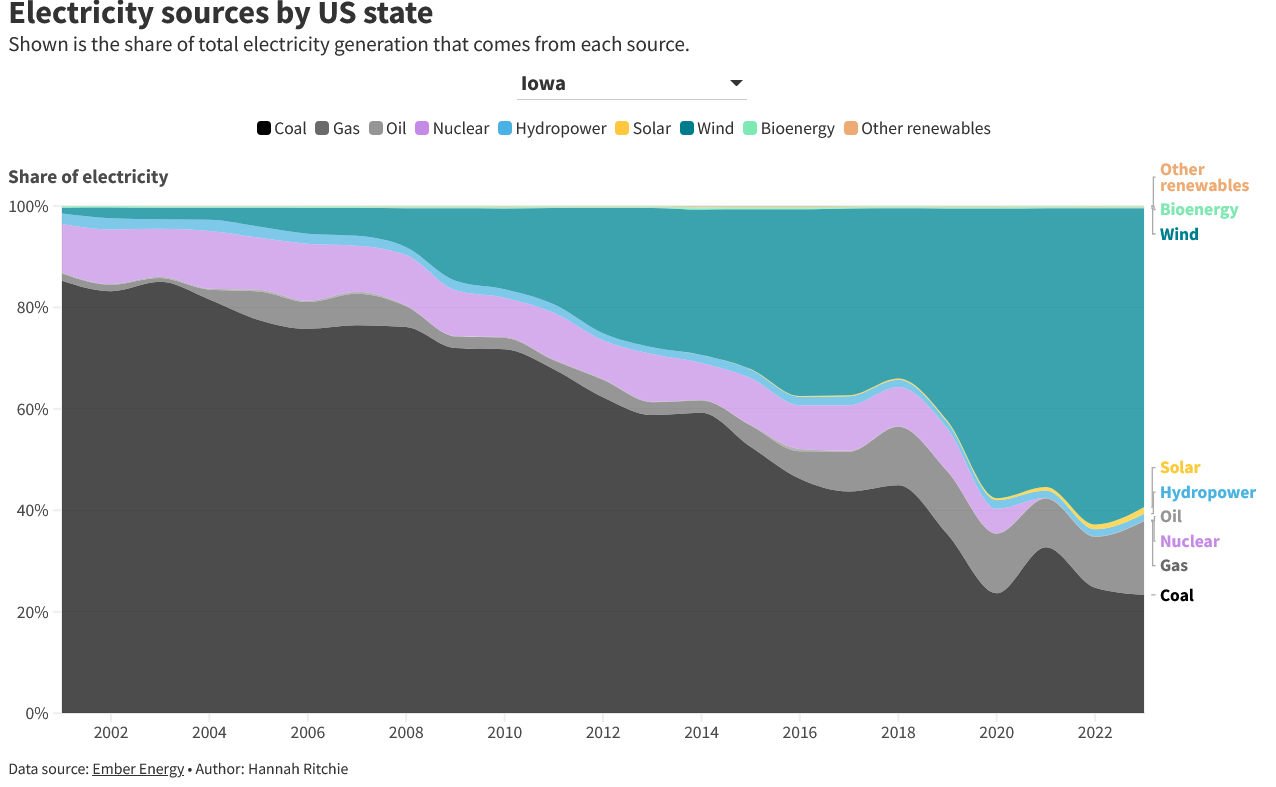
Hannah Ritchie, author of Not the End of the World: How We Can Be the First Generation to Build a Sustainable Planet, posted a widget on the internet with a state-by-state analysis of electricity generation sources. Find it here. Here is where Iowa lands:
Here is another chart:
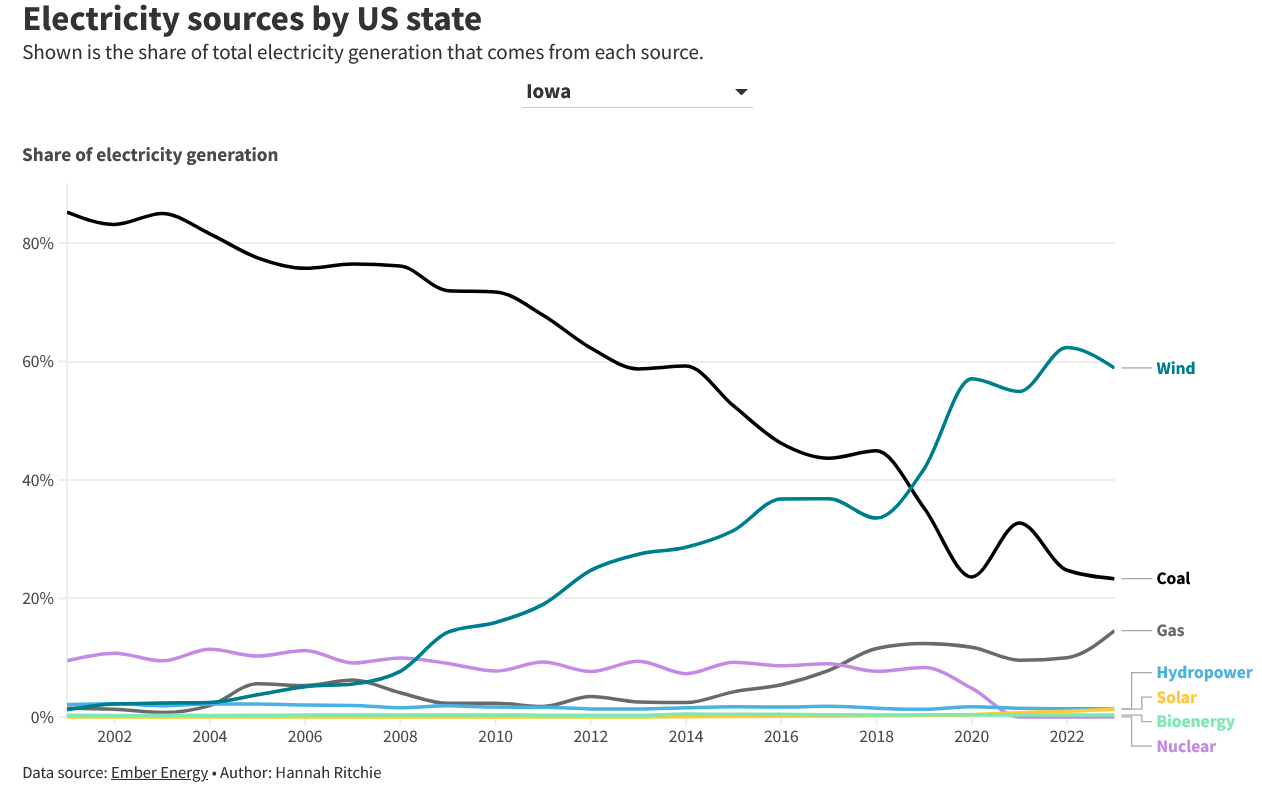
Iowa is a leader in wind energy and has plenty of room to improve our solar capacity. There are environmental issues with every form of electricity production, yet burning fossil fuels is our most immediate danger because of the role of carbon dioxide in enhancing the greenhouse effect. Despite today’s low temperatures, Iowa is simply too darn hot.
The trend on the following chart is the right one. As a state, we need to move more quickly.
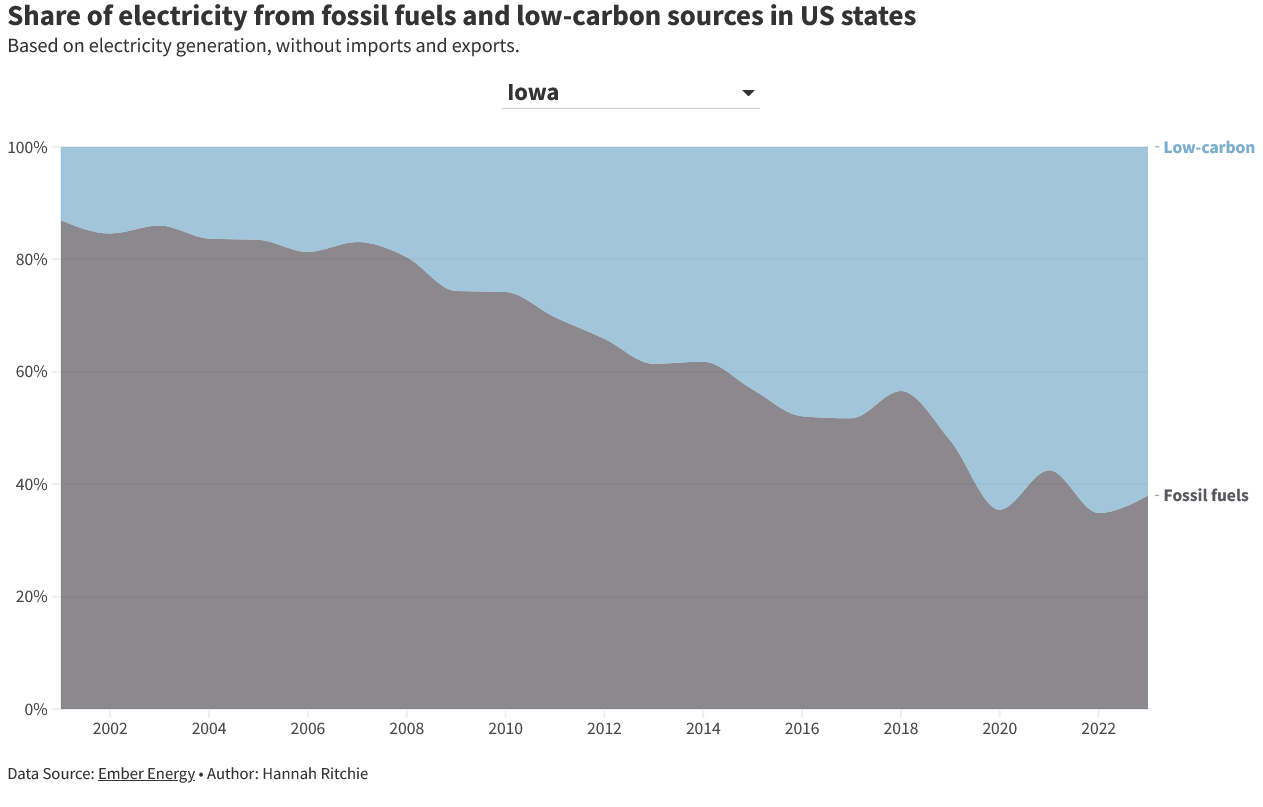
It seems obvious to me that to get to zero fossil fuels used to generate electricity Iowa needs to install many more solar panels. There are issues with both wind and solar generated electricity.
The wind doesn’t always blow and the sun doesn’t always shine. They can be addressed. One of the key strategies to deal with intermittency, which is what this is called, is to improve the forecasting and planning of renewable power generation and demand. Another strategy is to invest in storage and integration solutions that can balance the supply and demand. A third strategy is to foster innovation and adaptation. This involves developing and deploying new technologies, designs, and practices that can enhance the performance, efficiency, and resilience of renewables. We need the will to solve these problems.
So the news about electricity generation in Iowa is positive. We just need more renewables and technological solutions to deal with intermittency so we can replace fossil fuels altogether. To a reasonable mind, this can be accomplished. Now we just need our regulatory and governmental authorities to get on board.
 Journey Home
You must be logged in to post a comment.