Categories
Living in Society

Chasing Presidential Candidates

Detail from the Internet Headline of the Monmouth University Poll, April 11, 2019

Our county-wide newspaper reported more than 900 people turned out to see and hear U.S. Senator Kamala Harris (D-CA) speak at the Iowa Memorial Union in Iowa City Wednesday night. Harris is running for president.

She is one of roughly two dozen presidential hopefuls courting Democrats in the run up to the 2020 Iowa precinct caucuses, which are first in the nation among presidential preference polling. In Iowa we don’t call it voting because we don’t want New Hampshire, which has a law requiring them to hold the first in the nation primary election, to get mad. According to the Des Moines Register, there have been about 300 candidate events like Harris’ this election cycle.

Vice President Mike Pence is scheduled to be in the Hawkeye State today, visiting the emblematic disaster wrought by government policy in the form of extreme weather and severe flooding made worse by global warming. Pence and his boss are also running for president and today’s disaster walk also serves as a campaign stop, that’s how base our politics has become.

I’m more interested in Democrats.

Iowa has not dealt with political hugster in chief, Joe Biden, who leads Democrats in the recent Monmouth University poll of 350 prospective caucus-goers.

I don’t see the support for Biden. While his 27 percent puts him in front of this murder of crows, it may be a ceiling, subject to being overtaken as the field consolidates. I also don’t believe my cohort wants someone our age as president. That polling calls were split 50-50, landline – mobile, favors a certain kind of sixty- or seventy-something. The kind that likes what is familiar whether Biden or Sanders. But what do I know? I didn’t ask 350 people and am limited by Dunbar’s Number. If curious about the horse race or this poll, click the image above.

Local elected officials seem to be chasing the presidential candidate selfie with gusto. A few electeds have declared for a single candidate, most have not. The sensible plan is to wait until another 300 candidate visits to Iowa have passed and decide by end of summer. Declaring too early can prove to be problematic, especially if the chosen one drops out early. If Iowa is to remain first in the nation, multiple candidate selfies make things seem welcoming and unbiased during the early days of the campaign.

I don’t feel a need to chase candidates to meet with or hear them in person. I understand how video services on the internet work and for the most part, adequate candidate video becomes available after key events. My personal interaction with candidates is important to personal story-telling. I’d like one or two more encounters to add to my repertory of hearing Julián Castro speak bathed in the light of mobile phones during a power outage (click here for my post on the Castro visit). Deciding by Labor Day allows plenty of time to work in my precinct for a chosen candidate. My current post about the Iowa caucuses can be found here.

All this candidate chasing is fine, but the main prize in 2020 will be the U.S. Senate seat currently held by our junior senator, Joni Ernst. According to news reports, she has $2.8 million campaign cash on hand for the election. Democrats haven’t picked a candidate to challenge Ernst and aren’t expected to finalize a decision until after the 2020 summer primary. We’re starting the race with shackles binding our ankles, but that doesn’t mean we can’t pull an upset. Regaining control of the U.S. Senate is essential to hopes of implementing a Democratic agenda in the federal government under a Democratic president.

When I look at the 24 candidates identified in the Monmouth University poll there are only a few about which I’m interested in hearing more. In no particular order, they are Castro, Elizabeth Warren, Pete Buttigieg, Amy Klobuchar and Jay Inslee. The ten with less than one percent support in the poll should read the writing on the wall and gracefully make their way to the exits. As for me, I’ll be seeking opportunities to post about the campaign as I attend more events, midst a life of staying active in society. Staying active is about a lot more than politics.

Categories
Living in Society

Politics and First in the Nation Iowa

Iowa Caucus Goer

On Saturday the Iowa Democratic Party Central Committee addressed the complaint national media and other states have had about an opaqueness of our first in the nation precinct caucuses.

“This year we proposed the most significant changes to the Iowa Caucuses since 1972,” according to the IDP website. “We are confident that these proposed changes will make the Iowa Caucuses the most accessible, transparent, and successful caucuses ever.”

It looks like the state party will release raw support tallies (i.e. not votes) for the first time since Iowa rose to prominence in the wake of the disastrous 1968 Democratic National Convention in Chicago. The Chicago convention brought us Hubert H. Humphrey of Minnesota, the last nominee to emerge from a smoke-filled room.

My friend from the 2007-2008 John Edwards campaign David Redlawsk wrote the book (with others) on the Iowa Caucuses, Why Iowa? People don’t always buy the authors’ answers. I land with my friend and fellow Democrat John Deeth who settled for 10 percent and accepted the IDP changes.

As an Iowan more active than most in Democratic politics, I acknowledge the decreasing significance of what we do in the presidential horse race. While we get to see a number of presidential hopefuls, and garner media attention in the run up to caucus night, the early presidential nominating process includes not only the four early states — Iowa, New Hampshire, South Carolina and Nevada — but Super Tuesday (this time on March 3, 2020) when a number of states and U.S. territories hold their presidential primaries. The idea that Iowa would winnow the field of presidential hopefuls is less true than it was because of this.

Clearly there are more than two or three tickets out of Iowa this cycle as smart candidates are already campaigning in California, Texas, and other Super Tuesday states. If viable, they will continue at least that far. It is an easy prediction that the nomination will be winnowed down to two after Super Tuesday, and this year, maybe even to The One.

It’s also true that winning Iowa alone is not enough. John Edwards put almost all the chips on the table to win Iowa and when he came in second in delegate count, he had to scramble to cover South Carolina and Nevada with organizers. Whatever the tallies in the four early states, whatever number spinning takes place, a rationale for continuing has to be credible even with new momentum toward Super Tuesday.

I don’t know if any of them will be my final choice on caucus night.

The Democratic National Committee did the first funnel for us already by requiring participants in the first summer debate to secure at least 65,000 unique donors of any dollar amount. Some may grumble about money in politics or “insiders” controlling who’s viable and not, however, number of donations is a fair and transparent measure of viability. I gave small donations to eight candidates I’d like to see on the debate stage. I don’t know if any of them will be my final choice on caucus night.

The 2008 caucus, the closest to level of participation we might see in 2020, was a nightmare from my perspective. The room wasn’t big enough and I chose to both be a precinct captain for John Edwards and help my friend Bob run the event. Doing both proved to be impossible. We had only about 260 attendees.

We put the Edwards group in the hallway, partly because we had so many infirm and elderly in wheel chairs, but also because there wasn’t enough room in the main room to count. I had to count attendees multiple times, which got everyone mad at me, with accusations that my true purpose was to recruit more people for the Edwards camp. In the end, after the final alignment, Obama had 85 people, and Clinton and Edwards split the rest equally, requiring a coin toss to see who got an extra delegate. (Hillary won the coin toss). Once delegate assignments to the county convention were finished, the mass exodus left Bob and me struggling to fill our precinct’s allocated committee positions.

The Iowa caucuses in presidential years are not as much about organizing the party. There is a legitimate issue with finding enough rooms to adequately accommodate caucus-goers, so it would be great if people caucused virtually instead of showing up to name their candidate, then go home without further ado. To say the actual caucus helps organize the party is inaccurate, it doesn’t. If there wasn’t a shortage of people interested in training to run a caucus, I’d participate virtually and let go the reins.

Iowa retained first in the nation status this year partly because IDP was forced to listen and make the caucuses more inclusive and transparent. Having done that, we have an avalanche of presidential hopefuls arriving in the state. My main goal is to keep focus on what I believe is the prize (the contest for U.S. Senator) and avoid getting trampled by the donkey stampede. In my favor is experience, which will hopefully prevent me from picking unnecessary fights.

Categories
Sustainability

Does Nuclear Weapons Spending Make Sense?

Garage Sign

Does it make sense for our federal government to spend almost one and a half trillion dollars on a nuclear weapons system that should never be used?

No.

The Trump administration plan is to rebuild the entire American nuclear arsenal, including development of new, so-called “low-yield” nuclear weapons. During military training we prepared for deployment of such “tactical” weapons.

After spotting the signature flash or mushroom cloud of a nuclear detonation, while maneuvering among people’s farms, towns and businesses, we were to avert our eyes, find a low spot on the ground and cover ourselves as best we could with our poncho to prevent radioactive fallout from touching our skin and clothing. If we survived, we could go on fighting.

After the breakup of the Soviet Union, and elimination of tactical nuclear weapons, developing them again sounds crazy. We could build thousands of new community fire houses with that kind of money.

As Iowa ramps up for the first in the nation caucuses, we should ask presidential candidates, “Will you oppose current plans to spend upwards of one and a half trillion dollars on a plan to rebuild the entire American nuclear arsenal?”

Voters will likely welcome the responses.

~ Published in the Solon Economist on April 11, 2019.

Categories
Living in Society Writing

New Way of Seeing

Flooded Wetland

I had an epiphany while reading Mayor Pete Buttigieg’s memoir, Shortest Way Home, the March release of which coincides with his presidential campaign.

In the first chapter he described growing up in South Bend, Indiana, a place I frequented while working in transportation at about the same time.

It was a stretch to understand Buttigieg’s new narrative of something I knew well during the late 1980s. My conclusion after finishing the first chapter was I feel too comfortable with people closer to my own age with similar experiences. Like it or not, aware of it or not, a new generation of Americans has arrived and is already making change in a society I increasingly recognize only in memory.

I don’t know Buttigieg’s presidential chances among a large field with many experienced politicians, but I know this: I’d better join younger people in their efforts to improve society or get out of the way.

I’ve written about the struggle of young farmers regarding land use in our county. Some of them have been addressing the county board of supervisors since 2013 about the 40-acre rule which defines a farm. If a farmer farms on less than 40-acres here, by definition, it is not a farm, and therefore, the financial remedies of the Iowa agricultural exemption are unavailable. Having advocated with the supervisors during the run up to the most recent five-year land use plan, they are making an end run around them for lack of accommodation, seeking a remedy from the state legislature. Whether they will be successful this year is uncertain, but eventually they will reshape the law to better fit their vision of contemporary farming.

Congressman Dave Loebsack is in the same cohort as me, about a year younger. A relatively small group of us joined together in Iowa City to open his first campaign office for the 2006 election. Together we beat a 30-year incumbent Republican in the general election. Over time there have been complaints that Loebsack is not progressive enough. If one looks at his actual positions and votes, and hears it from him personally as I’ve been able to do because of our long relationship, that seems ridiculous. However, the new generation will have their way, maybe not now, maybe not in an orderly way after Loebsack retires, but their patience with perceived grievances won’t be bottled up for long. As Buttigieg’s narrative of South Bend in the late 1980s instructs, there is a different way of seeing things and it is not the view of white guys like me.

After the decennial political redistricting in 2010 Bobby Kaufmann won the first election in newly formed House District 73. He has dominated the district ever since, despite efforts by Dick Schwab (2012), David Johnson (2014), and Jodi Clemens (2018) to win the seat. Like him or not, he is the face of the new Republican party in Iowa and a popular figure in the district and around Iowa. That’s not to say he’s popular among Democrats and progressives because he mostly isn’t. Because he won four back-to-back elections he rose in the legislature and became the gateway for constituents to get things done. Will he support all of our initiatives? No. Will he listen? I found the answer to be yes.

I no longer see life through the eyes of a thirty-something. However, I’m willing to set aside my biases and predispositions if I can and spend time with men and women in their 20s and 30s to work on common issues. It’s the lesson I’ve learned from Pete Buttigieg’s candidacy.

There is so much needed to improve our lives and old solutions no longer work. To find our way, we need something different, and better. Our hope lies with the thirty-somethings who have arrived — like it or not.

Categories
Living in Society

Political Bandwidth

Cup of Coffee with State Representative Bobby Kaufmann, Stanwood, Iowa, March 16, 2019

The 2020 general election will be challenging for a lot of reasons, not the least of which for me is deciding whether policy or politics is the most important part of it.

Politics is the art of what’s possible. I’m over the naive notion that policy matters more than politics, although the art of what’s possible has produced some problems.

Perhaps the best recent example of politics over policy was the Patient Protection and Affordable Care Act, which passed with only Democratic votes and has been fought tooth and nail by its opposition ever since. Voters want better health care, but the ACA was challenged from the beginning. It didn’t deliver better health care. The insurance premiums were expensive. The co-pays were high. The only talking point that persists is that more people who did not have access to health care were covered. Despite continuing feel-good stories about the ACA, its solutions were not so good. It was what was possible.

A policy-only approach to the 2020 general election is equally problematic. I believe it is mostly because of the decline in K-12 education, the rise in private and home schooling, and the dominance of FOX News and right-wing radio among people who continue to be radio listeners or view television broadcasts and cable. The electorate has been dumbed down and will swallow almost anything people hear repeated often enough. Making policy for a gullible electorate results in crap for legislation. When the court system finds such legislation deficient, as in the recent “fetal heartbeat” law in Iowa which was declared unconstitutional, the reaction from a dumbed down electorate is “impeach the judges.” Ill-informed notions of how government works are de rigueur and infrequently challenged.

Policy wonks talk among themselves in a bubble of their own making but their policy products are not often well received. What will stand the light of an open society? Getting out in it.

It is easier to think and talk about politics than to get out of a house or apartment and actually do something in political society. Once a person escapes the fencing of confirmation bias and faces actual people with differing views, a couple of things become immediately apparent. The biggest is a person no longer has internal debate, mistaking it for action.

We are on our best behavior in a gathering of diverse people — less likely to assert extreme positions. It is a moderating effect of social interaction. It is easy to generate excitement among a small group of friends with common interests. What is hard is persuading people much different from us our ideas have merit.

There is a tedium to working through issues with others which can take the fun out of problem-solving. In modern society we want our gratification and conclusions right away. Execution of them becomes a neglected afterthought. Working through issues together requires a commitment to process that isn’t part of ad hoc meetings in public. We are a society with decreasing respect for such group decisions. More characteristic of how it works is some of us would rather drop our policy bomb at a gathering — like a terrorist with no serious intent of further discussion or resolution — and having disrupted normal discourse, escape to our compound. It gets old, fast.

The radio spectrum is a good example of our politics. On the A.M. band there is one type of programming, on the F.M. another. There is satellite radio that bypasses the spectrum. All of them play a role. I currently have only four stations programmed on my car radio where I do most of my listening.

During my transportation career I traveled a lot. When with my boss in Pennsylvania, Georgia, or other godforsaken places, he would turn on the radio in the rental car, find Rush Limbaugh, and want to have a conversation with me about it. I refused to participate meaningfully. I viewed political talk in the workplace as unnecessary and unwanted when there was so much else to discuss regarding our business. He would hammer me about Robert Bork’s nomination to the U.S. Supreme Court which had occurred more than a decade earlier. I failed to mention I was a supporter of and had caucused for Ted Kennedy during the 1980 Iowa caucuses. Maybe it would have been better to rip the bandage off and get it all out there. Maybe I’d have lost my job, but maybe not.

On Saturday, a farmer friend and I met at her farm and drove over to Stanwood for a meeting with our state representative, Bobby Kaufmann. The obscure town along U.S. Highway 30 is home to some scrappy people: doomsday preppers, FOX News listeners, and citizens with tough personal stories. We were welcomed by a group of about 27, and are getting to know some of the regulars who attend these meetings. It was one of the best political meet ups I attended.

What made it good is after four elections, Kaufmann rose within the Republican Party which has a majority in the House of Representatives. Because of his leadership position, he knows what is going on with issues that are in the news. A person wants that in a politician. While Kaufmann and I don’t often agree, we find common ground. My questions were few and centered around issues that matter to me: water quality, state revolving loans for public utilities, IPERS, and that’s it. He’s a skilled legislator who can focus both on policy and the art of what’s possible. He paid for coffee and cinnamon rolls for anyone who wanted them.

The easy statement to make is we should balance our politics and policy. I’m not sure about that. A better approach is to recognize there is political bandwidth and tune in. We find opportunities to move the needle of policy a good distance through discussion with diverse groups of people. When that’s not possible, talk about what is. I believe that can be how bold change in society takes place.

It’s part of sustaining a life in a turbulent world.

Categories
Living in Society

Normal Saturday Morning of Politics

Colleen Bringman, Katie Biesendorfer, Kyle Tester and Carmen Black on a Specialty Crop Producer Panel in Montgomery Hall, Johnson County, Iowa on March 9, 2019

Ice and snow began to melt, exposing a small disk of grass over the septic tank. It suggested an overdue spring is arriving. After a long, hard winter I’m skeptical.

Time to get outside the house for something other than work.

Saturday became a series of renewed conversations with friends. Politics was part of three events in Iowa City and Coralville, coffee with Congressman Dave Loebsack, a forum hosted by the Johnson County Food Policy Council, and a fundraiser for Eric Giddens who is running to represent State Senate District 30 in a March 19 special election. I’d forgotten how many friends I have in the community.

Not everyone in Iowa has first in the nation caucus fever. Politics was discussed. It was local politics. The field of Democratic candidates for president is beginning to come into focus. While some have declared a candidate preference, many of us are anxious for spring to begin, such anxiety pushing aside the vagaries of the nascent Democratic presidential nominating process. I felt like a normal human by not thinking about presidential politics for a morning.

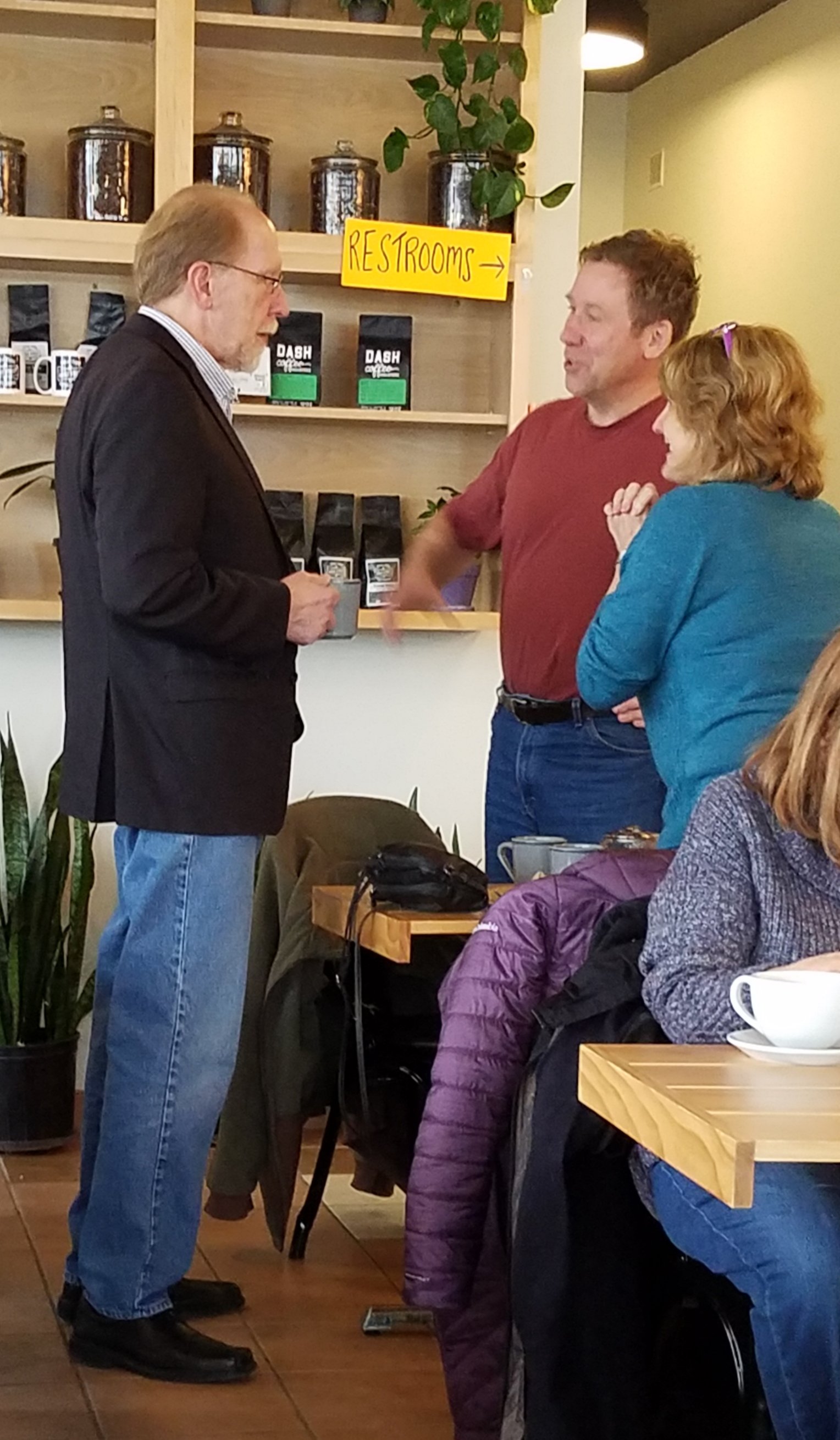
Congressman Dave Loebsack chatting with constituents at Dodge Street Coffee, Iowa City on March 9, 2019.

The first event was coffee with Congressman Dave Loebsack at a coffee shop co-located with a convenience store near Interstate 80. In a welcome turn of events, there was no speech. Loebsack spent the hour meeting individually with attendees without a set agenda. The event was very personal and individualized.

I overheard the retired college professor mention his age, 66 years.  The average age of members of the 116th Congress is 58.6, according to Politico, so that makes Loebsack older than average. It seems unlikely he will have the longevity in the House of Representatives of the late John Dingell or other long-serving men and women. Who might replace him when he retires is an open question for constituents. The last few times I was with Loebsack he publicly mentioned his age or his potential retirement so it’s out there.

I didn’t have much to say to the second district congressman as we shook hands. He knows my issues: climate change and preserving Social Security and Medicare. We met during his first election campaign in 2006. He knows me, we share a common history, and that is something for a person who represents roughly 750,000 people.

From North Dodge Street I drove through the county seat to the fairgrounds where the Johnson County Food Policy Council was hosting its 5th annual forum in Montgomery Hall. My friends and colleagues Carmen Black of Sundog Farm and Kyle Tester of Wilson’s Orchard were both part of a specialty crop producer panel.

Black announced that HSB239 is advancing in the legislature. She later said the bill is expected to pass the Iowa House of Representatives. The intent of the legislation is to help small and new farmers overcome high land prices and get started in farming. The bill defines a farm by the amount of agricultural revenue a property produces rather than any set number of acres.  Getting the agricultural exemption, which is part of the point of the bill, is crucial for small and new farmers.

I spoke to two of the county supervisors after the panel and brought the bill to their attention. Supervisors have a lot of issues on their legislative agenda and this bill was introduced without fanfare only last week. If adopted, HSB239 could have an impact on county land use policy and regulations.

I left Montgomery Hall, and a free luncheon from Local Burrito Catering, heading to the Iowa River Landing in Coralville where the fundraiser was in progress. I arrived as Iowa senate minority leader Janet Petersen was finishing her speech. The event was hosted by the three state senators who represent Johnson County, Kevin Kinney, Joe Bolkcom and Zach Wahls, who were all present. Wahls is my state senator. My intent was to drop in, write a check, and head home. So many people I hadn’t seen in a while were there so I spent most of an hour in conversations. Zach Wahls has proven to be accessible since we elected him last November. I encouraged him to continue his excellent communication about what’s happening in the legislature in various media.

As the gathering broke up I walked in a light, sweet rain to my car across the roundabout. I headed north on Highway One thinking, “I’ve got to get out more often.” I felt a longing to make more trips to the county seat. When spring arrives, maybe in April, I will.

Categories
Living in Society

In the Odd Year

Aftermath of the Hieronymous Square Fire in Iowa City

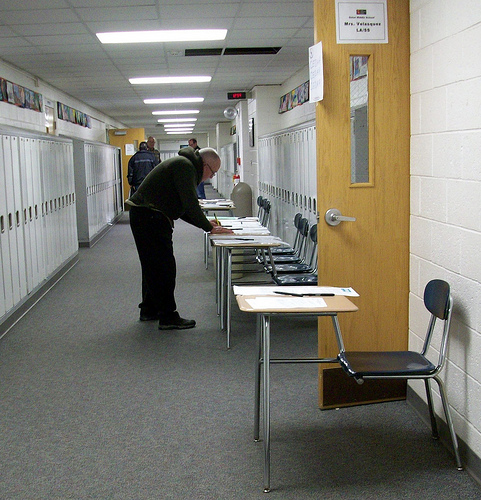
Our county Democratic party held it’s odd-numbered year meeting last night.

We had little choice in the matter as the call came from state Democratic party chair Troy Price:

The Iowa Democratic Party calls upon each County Party to hold an Odd-Numbered Year Meeting, often called “Off-Year Caucus,” within the first quarter of the year of 2019.

The purpose of the Odd-Numbered Year Meeting is to nominate committee persons to fill precinct vacancies, to discuss priorities regarding platform resolutions, and to begin precinct-level planning for the remaining year.

This call is in accordance with the Iowa Democratic Party Constitution, Article II, Section 4 and has been issued by me as the Chair and approved by the State Central Committee.

All Odd-Numbered Year Meetings must be held by March 31, Price added, continuing the excessive use of capital letters. Bold type is mine.

Former State Senator Bob Dvorsky chaired our meeting. The chair and everyone who was a committee person was re-nominated and elected for another term. Our liberal central committee is mostly about fund raising, volunteer recruitment, and servicing the policy peccadilloes of central committee members. Thanks to the experience and efficiency of our chair, tedium, while present, was kept to a minimum.

State Representative Mary Mascher reported on the recently finished “funnel week” at the state house. There was good, bad and ugly. With Republicans in charge, there was more than enough bad and ugly to go around. As Mascher said, “Republicans took the fun out of funnel.”

There were legitimate victories for everyone in clearing bills from committees. Particularly important was HF608 which would create a uniform process in Iowa for determining which absentee ballots sent via U.S. Postal Service would be counted. Also important was a bill working toward a constitutional amendment to restore voting rights to felons once they paid their debt to society. Contrary to what we can read on social media, it is possible for Democrats and Republicans in the legislature to work together on common goals, and they do. Wish they would do more of it on key issues where we disagree.

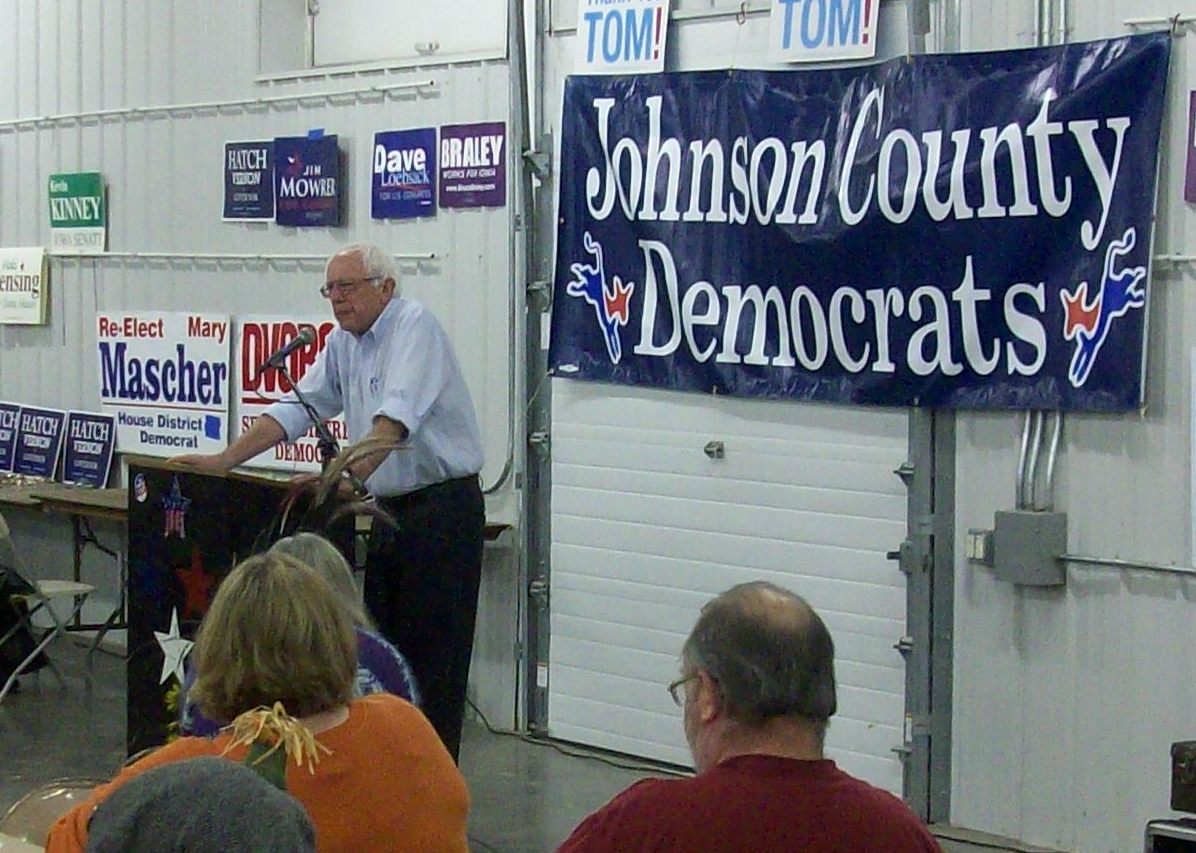
Toward the end of the meeting, county chair Chris Taylor kicked off a discussion of deterioration of Democratic presence in rural areas. I piggy-backed onto his comments as did half a dozen others who represent rural communities on the central committee. I had previously explained the challenge Democrats have in rural precincts and quoted some of those election results in my short speech. Results of the recent special election of County Supervisor Royceann Porter place the rural-urban divide in sharp contrast.

It’s not that party officials don’t want to slow or stop the deterioration of support from rural voters, they do. County auditor Travis Weipert asked me after the meeting what could be done about the problem. Answers are hard to come by but it boils down to inclusiveness.

Part of the problem is an often-repeated narrative about electoral margins for which party officials pat themselves on the back. The narrative is a false one in the sense that if Johnson County and it’s margins were removed from statewide results in recent elections, those results would not change. The narrative does little to improve inclusiveness in the county and should be abandoned.

The county party should create a positive, welcoming environment for people who aren’t as involved in politics as central committee members are. Almost all Iowans spend some fraction of their time on politics and the rest of it avoiding the p-word. Democrats should hold signature events — the fall barbecue, the hall of fame induction — while realizing they have little impact on rank and file members of the community. When it gets to caucus day next February, regardless of the outcome, every Democrat should feel like their time was well spent trying to make a difference. As a first time caucus-goer told the group in 2018, “we have to do something.”

If I could recruit a replacement on the central committee, I would. I fill the seat because no one at our caucus would take the job. I’ll continue to recruit someone, all the while knowing it’s possible to flip the precinct from giving Trump a win in 2016 back to a place that elected Obama twice. It will take work and everyone being included. Staying in touch with the urban Democrats is part of that, although not a big one. The odd year caucus puts that in relief.

Categories
Living in Society Work Life

Potluck Luncheon

Hay Bale

It runs counter to the Western Christian tradition but employees at the home, farm and auto supply store held a potluck luncheon on Ash Wednesday.

While others were submitting to dust from a priest’s thumb, my co-workers were feasting on loose meat sandwiches, deviled eggs and Amish Wedding fare in the form of pickled green beans and jalapeno-stuffed mushrooms. Tater tots revolved under the heating element of a shared pizza-cooking appliance.

One person brought red checkered tablecloths for our industrial tables in the break room, providing a festive look to the event.

The only penitence among my colleagues was related to over-eating.

The last Chevy Cruze rolled off an assembly line at the Lordstown, Ohio GM plant yesterday. I looked at photos of workers standing around the vehicle and had to look away. Too many memories of heartbreak among factory workers I’ve known. I conducted thousands of interviews with laid off workers when we lived in Indiana. Enough to understand the look in their eyes. Another sad day in the evolution of American manufacturing in the rust belt.

After work I stopped to secure provisions at the warehouse club, comme d’habitude. A farmer called me while I was contemplating the value of pre-cut aluminum foil sheets to be used wrapping root vegetables before baking. The issue was whether I needed a restaurant-sized box of 500 sheets rather than an inexpensive roll of aluminum foil to be replaced from the grocery store as needed. The farmer and I talked about legislation before the first funnel of the Iowa legislature. After 10 minutes we hung up and I decided to wait on the foil squares. I’ve been thinking about this for over a year.

Our county political party is re-organizing tonight. The meeting starts a little earlier than normal and word is the current party chair will seek another term. He’s the mayor of a small city near our border with Linn County. If he wants another term, I’ll vote for him. In our liberal county we tend to find a new chair each cycle, whereas counties with less Democrats in them tend to keep their party chairs for much longer periods of time. The chair has done a good job including old timers like me. The main work of the county party this year is preparing for the 2020 Iowa caucus. I know the drill, and since no one stepped up in 2018, I’m planning to run it again next February.

On my way home from work I noticed a number of homes along the route displayed political yard signs for the same candidate for city council in North Liberty’s March 12 special election. Placement is on or near property where signs saying “Lock Her Up” and “Trump-Pence” continue to be displayed more than two years after the 2016 general election. A reminder that even in the state’s most liberal county the overall political color continues to be red.

The best news this week was after my initial soil-blocking efforts at the farms I feel better with no soreness to report. Now if the frozen ice-pack that is our yard would thaw, I’d be ready for spring. It won’t be long.

Categories
Living in Society

Political Funnel Land

Iowa State Capitol

Monday’s date was written on an almost completed to-do list. I failed to figure out why.

I think it was because South Bend Mayor Pete Buttigieg held two public events in the county seat. At 2:30 p.m. he was hosted by the University of Iowa Democrats at a local bar, and at 7:30 p.m. the Iowa City Book Festival and Iowa City Public Library hosted him in one of a series of LIT Talks where he read from and discussed his book, Shortest Way Home: One Mayor’s Challenge and a Model for America’s Future. Buttigieg is a Democrat running for president in 2020.

Glad I’m not obsessing with the horse race to be president. I also wish my memory was better.

The political news originates from Des Moines where the Iowa legislature’s “first funnel” is this week. That means bills must be introduced and passed out of committee to remain viable for debate during the remainder of session. That is, unless someone, typically in the majority party, wants to stick the language into the end of year bills to balance the budget and close the session. A bill is dead if it doesn’t pass the first funnel, but not dead, dead.

I checked the daily bill roster several times yesterday and found one I believe has merit pertaining to pioneer cemeteries. I wrote an email to the county supervisors:

Supervisors,

House Study Bill 234 pertaining to pioneer cemeteries was introduced to Representative Bloomingdale’s committee on Local Government today. I read the bill and find it to have merit.

I served as a Big Grove Township Trustee for one four-year term. We managed Fackler’s Grove Cemetery near Seven Sisters Road which meets the criteria for a pioneer cemetery outlined in the legislation. George Fackler is said to be the first person who died in the township and is interred there. The cemetery had been neglected for many years and despite efforts between the trustees and the Ely Historical Society, little progress has been made identifying the graves, if that’s even possible at such a late date.

The question the legislation poses is whether management of the county pioneer cemeteries should be by the township trustees or a centralized county commission for that purpose. I favor the commission approach because of its potential to make the county approach to pioneer cemeteries more uniform.

I realize you have a lot on your to-do list, but if this bill makes it out of the first funnel I hope you will support it.

Thanks for your work on the board.

Regards, Paul

Many bills were filed yesterday addressing fundamental issues with government. There was a bit of fluff, but you’ll have that.

This morning I wrote the chair and ranking member of the State Government Committee about HF 608 which is “an act relating to the tracking and counting of mailed absentee ballots.” The post office no longer uniformly postmarks mail but they do affix a bar code with a time stamp in it. This unresolved technical issue could have changed the 2018 general election results in House District 55 where a number of ballots that lacked a postmark, yet had a bar code, weren’t opened or counted. The law needs fixing to keep up with post office practices and so voters will not be disenfranchised by a minor process deficiency going forward. We’ll see what the legislature does this week.

Adults in Iowa spend some part of their time discussing politics and the rest of their time pretending politics doesn’t exist. Yesterday was a day to spend in political funnel land. I’m not sure I’m the better for it.

Categories
Living in Society

Living a Terrestrial Astronaut Life

Squirrel Training for Acrobatic Work at Walt Disney World

I opened the door to the garage and turn signals on my car were flashing.

It was the first time in the garage yesterday and I feared having left something turned on, depleting the battery charge. I put the key in the ignition and it started.

At an undetermined point in the night turn signals and some dash lights started a slow blink. I couldn’t turn them off. I started the car and turned it off — still blinking. I started the car and drove it around the block — still blinking. Should I call my mechanic or troubleshoot and fix it myself?

I went to a computer and searched “1997 Subaru Outback lights blink when ignition off.” Some results came back and 83 people recommended a procedure to disconnect the battery, then reconnect it with the ignition turned on. It was simple and it worked. Make that 84 people recommend the procedure to reset the electrical system.

That I drive an old beater is not news. I bought it six years ago and with a good mechanic fixing things as they break, it gets me around. I feel a little like the Mercury astronauts running around Cape Canaveral before Florida car dealerships gave them Corvettes and such to drive, just another guy needing earthly transportation. As long as it is mechanically sound I don’t care what vehicle I drive. The astronaut dreams are extra.

Yesterday’s farm work shift cancelled because of a cold weather forecast the following week. CSA farmers who belong to Practical Farmers of Iowa gathered at a local restaurant to discuss their trade. I am a member but declined to go. I’m more interested in reducing the amount of farm work I do than in engaging more. Since I began earning a living wage last year the economic need for farm work went away. It’s mostly a social event any more despite the well-received work I do at the farms.

I woke early this morning, around midnight, and picked up my mobile device in the dark. There was a Washington Post alert from 11:24 p.m. saying Michael Cohen had prepared a written statement about his testimony today before the House Oversight Committee. In it, Cohen indicated Donald Trump personally signed the check to pay hush money to Stormy Daniels, and that Trump knew Roger Stone was negotiating with WikiLeaks to publish stolen emails from the Democratic National Committee during the run up to the 2016 general election. Trump and another of his attorneys, former New York City mayor Rudy Giuliani, have both accused Cohen of lying since then.

We’ll see what Cohen actually says while I work a shift at the home, farm and auto supply store. Like with Watergate, it would be hard to watch the proceedings live. If what Cohen said is true, the president has been lying to the American people. In today’s corrupt political climate I’m not sure what that means. If Trump were Nixon, we’d already have his resignation on our Resolute desk.