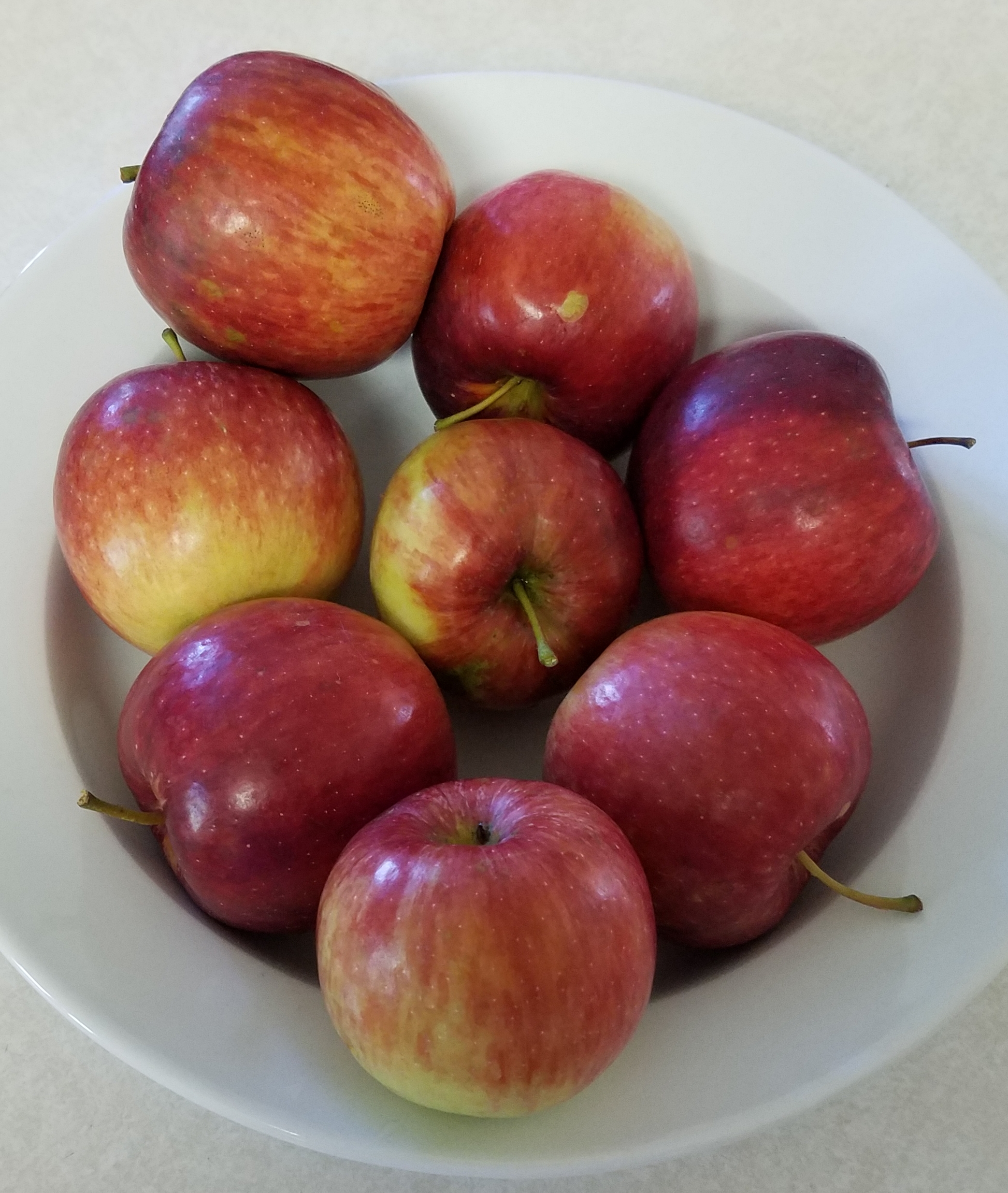
I finished what I’m doing with Earliblaze apples this year. The trees produced so much fruit I could not keep up. There will be plenty for wildlife to eat well into winter.
Besides eating them fresh, I made apple cider vinegar and applesauce for storage. I have a backlog of apple butter and dried apples, so none of that this year.
There is a brief break in apple processing while I wait for Red Delicious to ripen, maybe a week or two. After they do ripen, it will be a mad rush to the end.
When I planted six trees at home I didn’t know much about growing apples. I knew I wanted apple trees, in part because of family stories of my Virginia ancestors. I picked varieties that would space out the harvest. That’s about it. There were four varieties planted in 1994 and two remain. My learning about growing apples came mostly from working for seven seasons as a mapper (person who directs guests) at Wilson’s Orchard beginning in 2013. It was an unexpected job, but one for which I am thankful.
Paul Rasch and Sara Goering bought Wilson’s Orchard in 2009. Chug Wilson had planted more than 100 varieties of apples before he sold to them. During my tenure I learned about many of them. I would come in well before my shift and wander through the part of the orchard where trees were planted to test how they did.
What I value most about working there is countless conversations I had with Paul about apple culture. If I had a question, he had an answer. I would bring in photos of my home orchard for his advice. We talked about everything apples. Learning with an experienced apple grower was a perquisite of the job. It was great!
Years like this one I’m on my own for apples. My trees produced so many I don’t need outside apples. What I’m saying is I’m now an irregular customer of Paul and Sara’s orchard. I buy a couple of half-gallons of sweet cider in season, and if they have Gold Rush apples, I’ll get some for storage. For now, I have all the Earliblaze apples we can eat.
 Journey Home
You must be logged in to post a comment.