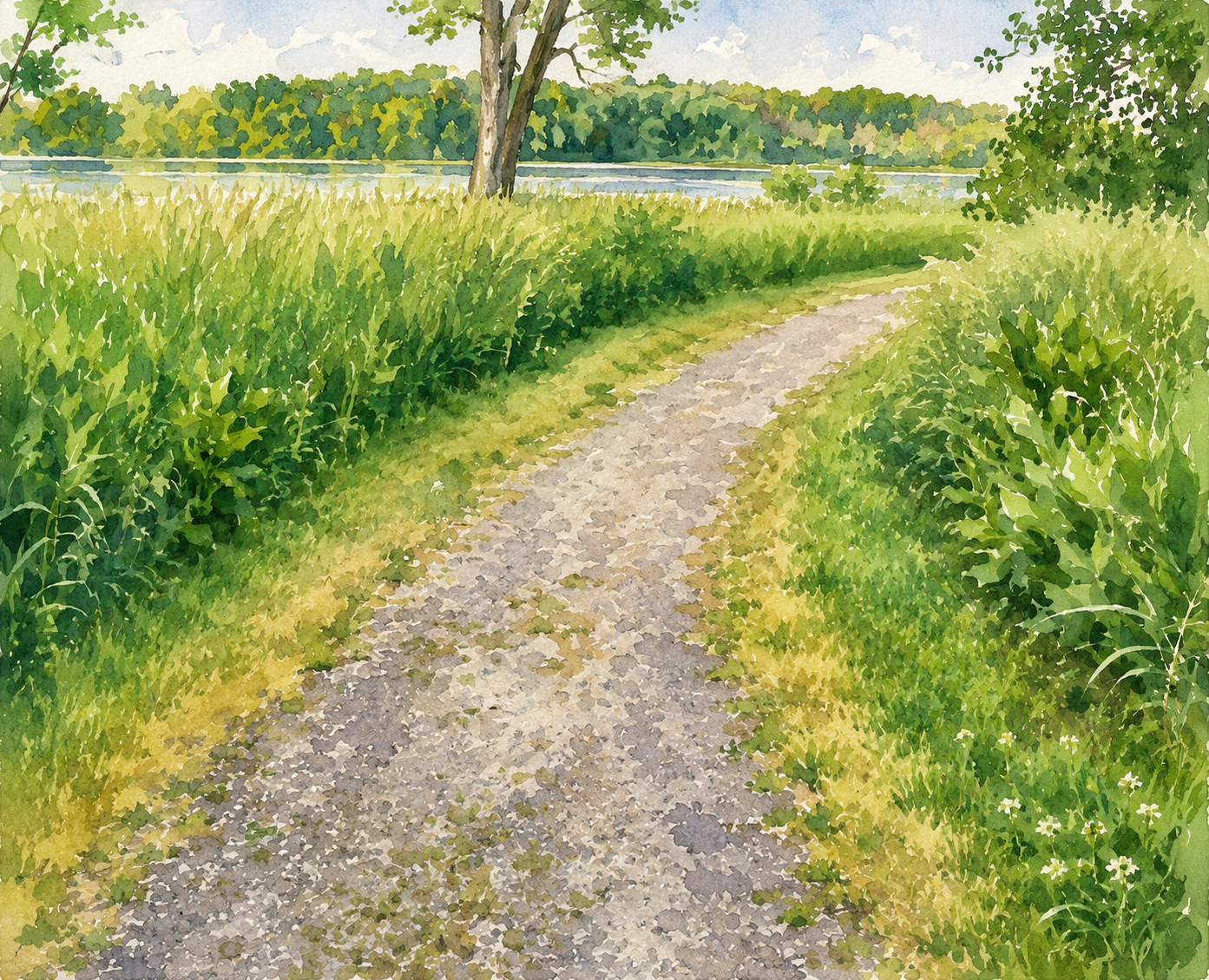

Some mornings I get out on the state park trail early — 45 minutes before sunrise. Ambient temperatures have been in the 50s and 60s at that hour, yet others are already out walking or jogging. I recognize most of them, if not by name, then by their gait, and whether or not they return a greeting. Some of them listen to books or podcasts on their mobile devices and pass unawares. I prefer walking out of darkness into the light of a new day with only nature sounds as my background.
By the time I return home, there is enough light to see the striping patterns on our neighbors’ lawns. They put down fertilizer, and probably pesticides, then mow much more often than I do. After all the rain last week, there is no striping on our lawn. That is by design.
When we built the house, our contractor put in a lawn using grass seed. The property is a former farm field, and while it hasn’t been farmed for 50 years, what grew up here afterward became well-established. What we planted did not persist as previously resident vegetation kept trying to re-establish itself. At some point I gave up.
That means I quit competing with neighbors over lawns. I stopped mowing every week, and eventually started mowing only when I needed the grass clippings for the garden. That enabled the vegetation that was here to return.
In addition, the taller grass provided habitat for birds, small mammals, and insects. It hid them from easy view. Instead of showing my handiwork in grass lines, I highlighted a place where local creatures could live and thrive.
Not every native plant belongs everywhere. The one in the photo below is pokeweed living next to the composter. It is highly toxic to humans. Pokeweed is propagated by birds dropping its seeds after eating the berries. The main risk was of contact dermatitis. I seldom eat plants I don’t understand.
I put on a long sleeved shirt, surgical gloves, and dug it out by the root. The root is very long. Taking the top 12 inches, there was a clean break indicating I didn’t get it all. Will watch the area to make sure it doesn’t return.
When I walk on the trail, I never know where the day will go. Today, it is pokeweed, which took an hour to investigate and resolve. Tomorrow, who knows. The uncertainty found in each day is a benefit of beginning with the sounds of nature. I wouldn’t have it any other way.

4 responses to “A Life Without Stripes”
Thank you for sharing this beautiful reflection. I enjoyed reading about your early morning walks and your appreciation for nature. Your decision to create space for local wildlife rather than focus on a perfect lawn is inspiring. The story of discovering and dealing with pokeweed was both interesting and informative. A wonderful reminder that every day in nature brings something new to learn.
Here in the Midwest, mowing and keeping one’s grass at a certain height is pretty much a religion. Would pretty much bet you’re the talk of the neighborhood, lol. But as you say (and I agree), who cares. Constant mowing and chemical grooming is such a waste of time, energy and resources. Time better spent raising one’s own high quality food.
We’ve been fans of the TV series Law and Order for a long time. A few years ago we happened upon a show called Lawn Order. It addressed the particulars about tending lawns that you brought up. Sorry for not having a link to watch.
With our five acres, we have several blackberry thickets for various animals. We also have a small grove/woods of hardwoods the birds love. The fences, with the various plants growing on or through them, provide nesting spots for small birds. The stand of pine trees out front provides shelter for various small birds. In the spring, we don’t mow for a while to let the wildflowers bloom. We often don’t mow the back section, letting the plants grow up.
We also fight pokeweed here. As children, we were told to never eat the leaves or berries raw, that they were poisonous. My family never had a problem with contract dermatitis. As children, we would paint our faces using the juice from the purple berries, then run around playing cowboys and Indians. I have heard of poke sallet, but never tried it. Pokeweed can be eaten if the leaves and shoots are cooked properly in the spring or early summer. I never meet anyone who makes poke sallet. Just the old folks talking about eating it when they were young. This discussion came from seeing our painted faces.