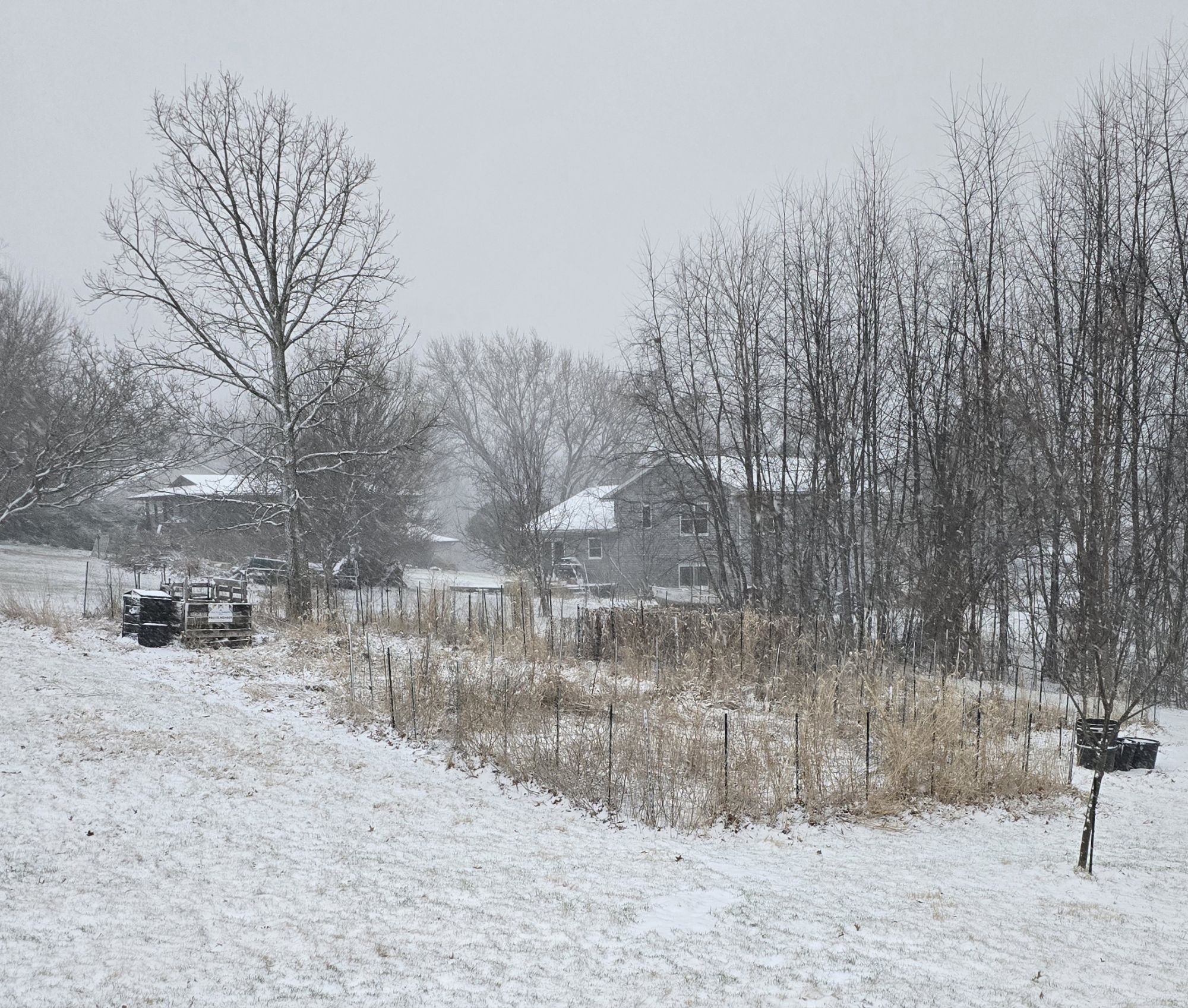
The best part of a garden is the produce harvested. A close second is the fresh meals made, followed by goods processed and put up in the kitchen, making the whole enterprise a kitchen garden.
I’ve written before, “The goal of having a kitchen garden is to produce food aligned with our culinary habits that helps meet a basic human need. We have to eat, no matter where, no matter how. It may as well be enjoyable. We’ve all eaten our share of food that doesn’t please our palate. A kitchen garden should address that.”
There is more than that.
A garden is a place where decisions accumulate over time. Where the house is positioned, where trees are planted, which ground is left open, where paths form — some by intention, some by use. Over years these choices create habitat where plants, animals, weather, and human routines overlap. The gardener participates in the process but does not control it completely. A deer path appears. Birds sow mulberry trees the gardener did not plant. Wind finds corridors between structures and foliage.
The result is not wilderness. It is something more ordinary and interesting: a lived landscape, worked for food but shared with whatever life finds its way there.
Some days I get up from the writing desk — an heirloom from my father-in-law’s estate — and simply walk to the garden. In late winter desiccated foliage is beaten down, showing the ground covered in plastic and mulch from last year’s growing season. Garlic is already up. Soon weeds will follow. I cleared a plot to bury the potato tubs for Good Friday planting. As soon as I can manage — between rain showers and late winter snowfall — digging begins.
A deer path emerged between the wooded acreage a few lots to the east and an apple orchard a quarter mile west of me. I walked those woods and saw deer beds in the thick undergrowth. I followed deer paths because they existed in a place infrequently visited by humans. There is no more direct path for them to the orchard than between my garden and the house. The frozen ground is scattered with hoof prints and deer pellets. I occasionally see them browsing for food near twilight, yet mostly they are unseen. The idea of growing an urban lawn isn’t viable here because of such traffic.
Our garden is a noisy place in late winter. Crows, red wing blackbirds, cardinals, sparrows, and finches welcome spring in loud musicality. The sound of rubber tires on pavement filters across the lake from the road to the commercial district. Neighbors walk dogs in small groups, their voices circulate the way strong winds move on their own path during a wind storm.
What lives here is habitat: a built environment made of decisions about garden plots, landscaping, and use. A permissive structure that allows fruit and vegetables to grow while not impeding local wildlife except to keep them from eating tender young plants. Part of me wants a nice lawn, yet the other part wouldn’t have it any other way than it is.
Spring begins on Friday, a form of rebirth, yet not new. As garlic planted last fall emerges, the world stirs with slow, obvious awakening from winter’s decay. I am ready for it.
 Journey Home
You must be logged in to post a comment.