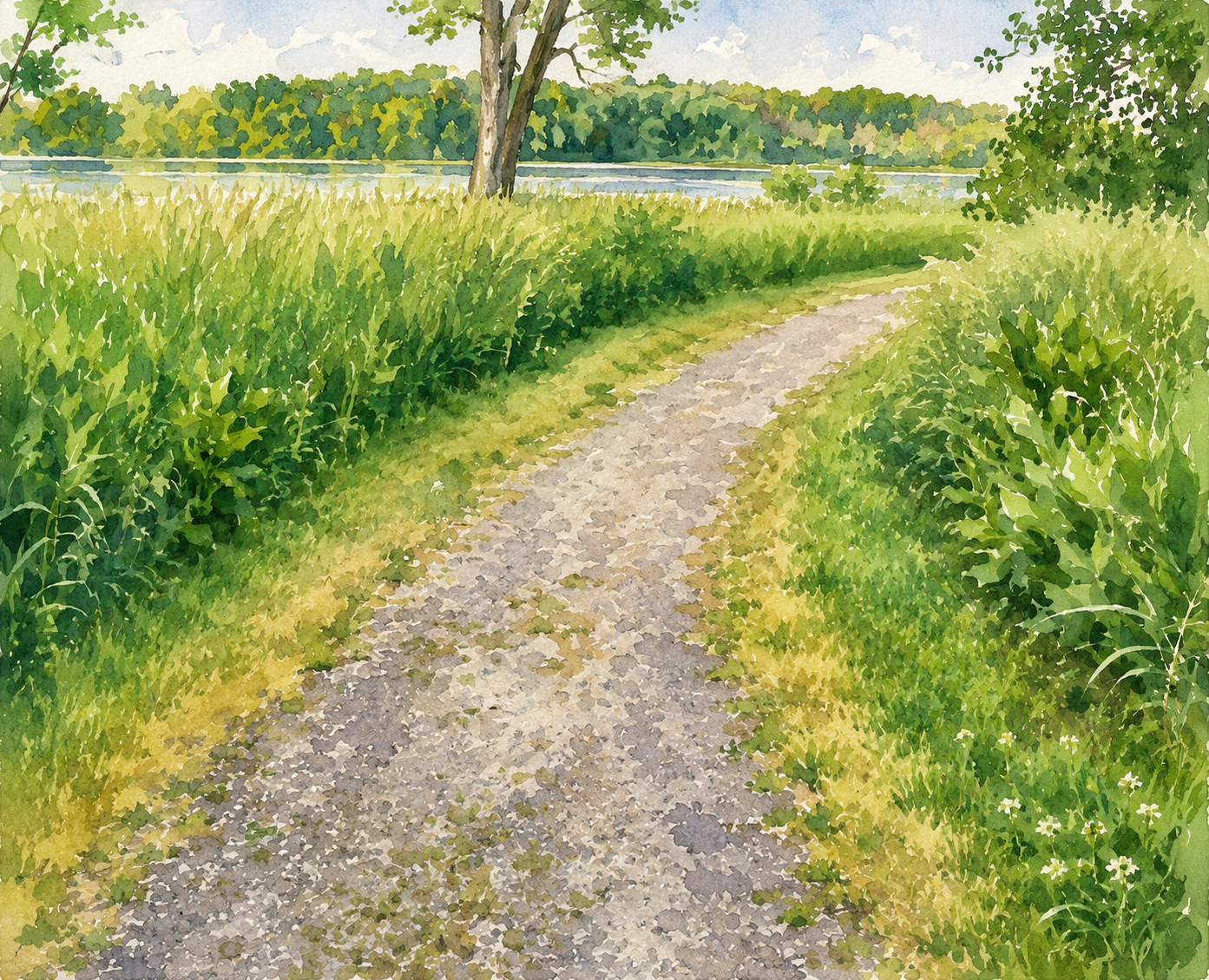

This spring unfolded early in Big Grove, a reminder of how closely gardeners watch nature. Phenology — the study of recurring seasonal events in plants and animals, such as leaf-out, flowering, migration, and fruit set — is an unfamiliar term that gives meaning to what gardeners do by nature when weather and climate change.
Garlic scapes are already emerging weeks ahead of what once felt normal, while fruit trees set despite the season’s accelerated pace. Kale, collards, chard, basil, and herbs surged into abundance under the steady warmth and rain, producing the kind of lush May growth more typical of June. The landscape feels slightly ahead of itself this year, as if the growing season quietly skipped a page on the calendar. As I said to a neighbor who stopped by the garden, “Garlic doesn’t pay attention to human calendars.”
A single lilac bloomed on Tuesday, May 26, far later than the main flush a few weeks ago. Perhaps one bud missed the cue for the stage call, yet persisted in making an entrance. It felt weird to see a late bloom, yet this has been a season of weird weather, so anything seems possible.
Main work last week included preparing the soil, ground cover, and cages for 19 varieties of tomatoes. This is a main crop, so doing it right is important. Rain on Sunday delayed planting again after 1.5 of 6 rows in.
I opened the covered row and everything looked good. Herbs were in abundance, with six basil plants leading the way. Everything I planted is growing in the herb bed. I harvested lettuce for tacos, and left everything else to mature. I am continually amazed by the productivity and quality of what I grow under the covered row.
The cruciferous vegetable plot is going gangbusters. I am just a few quart bags of scarlet kale from filling the four bins in the freezer for the coming year. After that, we will keep them to use fresh, with more than we can use to be given away to neighbors or the local food pantry.
I am experimenting with spring vegetable broth with deliberate attention to which greens I use for it. The first batch will include a 2:1 mix of collards to chard in an effort to make it more flavorful, and less generic. As a finishing herb, I plan to cut the outside green leaves from leeks and add them in for the final minutes of cooking. The idea is to harvest only the tops of the outer leaves so leeks can grow to maturity. I am looking forward to tasting this first batch.
Radishes and onions are plentiful. I finished picking the first round of radishes and sparingly culled a few green onions. I am determined to have a good crop of onions this year. The aforementioned leeks should be plentiful.
Week 8 feels like it should for a gardener. That’s before popular crops like tomatoes, peppers, cucumbers, eggplants, and celery are planted. It was a good week.
You must be logged in to post a comment.