Categories
Creative Life

It’s Still Spring

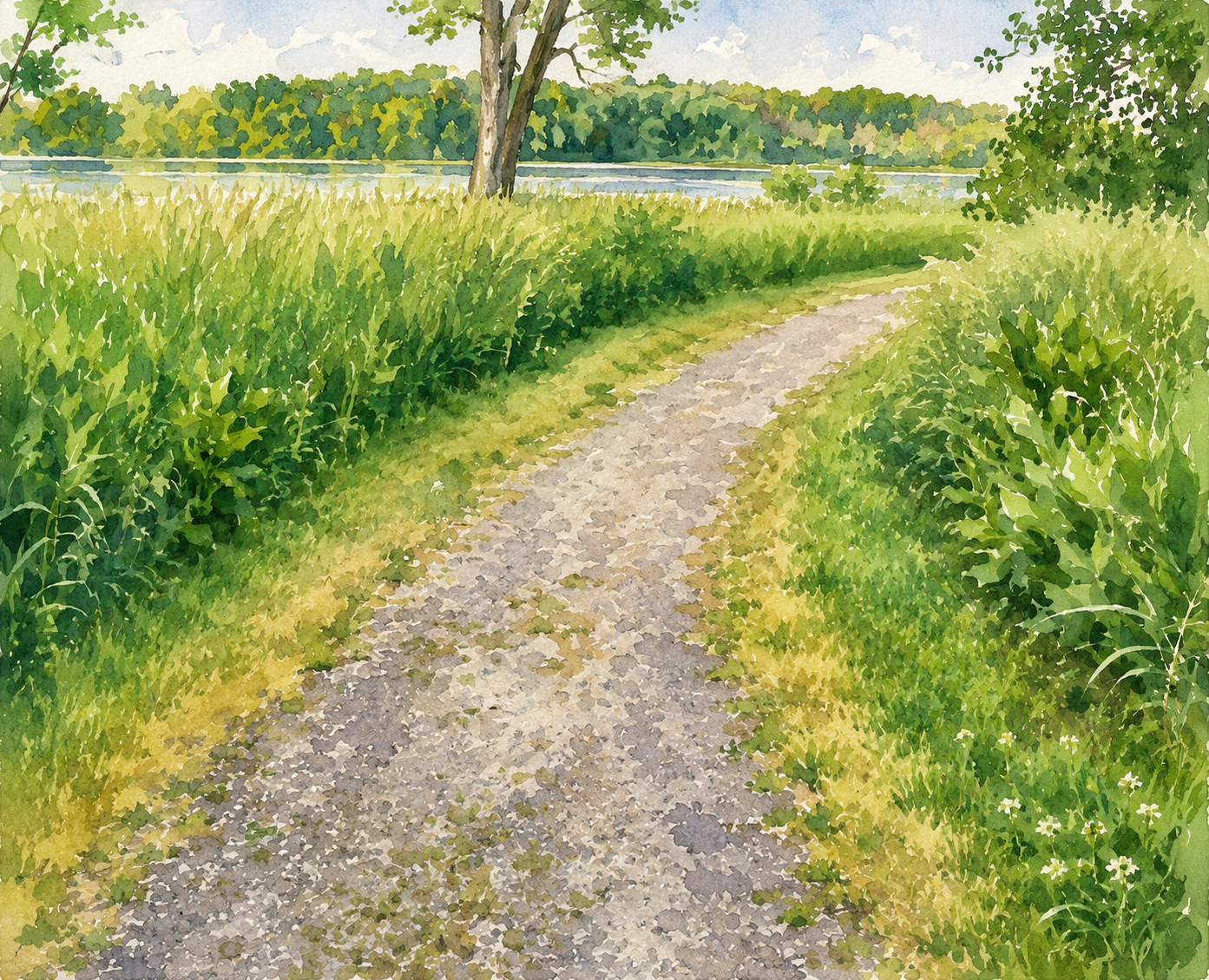
Pre-dawn light on the state park trail.

Signs of spring are everywhere: First sets of goslings on the lake with their parents, songbirds throughout the forested area, and earlier morning sunrises. During my at-home retreat, I have been keeping irregular hours and changing most everything about my daily schedule. On Tuesday I slept until first light, immediately dressed, and headed out for my morning walk without any of the normal daily regimen. It felt weird, but I did it. Behind all the schedules and regimen, I’m still me.

I came across what appeared to be a molted feather of a Barred Owl on the trail. Because I hear owls high in the tree canopy in the predawn light, there is ample additional evidence they are around. The feather confirms the species of owl. While researching the feather, I discovered the Migratory Bird Treaty Act of 1918, which governs such findings. The common outdoor saying, “take only pictures, leave only footprints,” applies here.

Barred Owl feather on the state park trail. The rules, according to the Migratory Bird Treaty Act of 1918, are to not touch them, tempting as it may be to pick it up and take it home. I took this photo and left it where I found it.

If you’ve been in the spice aisle of a grocery store, the high prices are quite noticeable. A jar of organic dried basil costs $7.75 per ounce at a local chain grocery store. If one buys bulk via mail order, the cost of a pound of the same product is $0.86 per ounce. I bought bulk of basil, marjoram, and parsley and shared the savings by giving some of it away to family.

Dried herbs bought in bulk and then broken down for a gift.

The big spring project is planting the garden. For now, I can stand all the work and hope to continue at least another ten years. Indeed the fresh produce—where I control the inputs—is of high value in our household. The year-to-date expense is running 73.4 percent of 2025. Lower costs have to do with purchases made last year, and reusing fencing, plastic ground cover, and the covered row. I’m not finished spending money but the trend is hopeful. Every pound of home-grown produce displaces money I would have to spend at the grocer or farmers’ market. It is a good way to live.

There was a chance of rain, but not much of a chance. We need rain, but the deep soil moisture is probably sufficient. The recent sunny and windy days have been drying the garden’s surface soil. That’s another spring worry—getting sufficient rain to produce a garden crop. Officials at the National Weather Service say we are near normal. That is good enough for today.

Categories
Living in Society

A Spring Retreat

First gosling spotted on May 6, 2026.

Once or twice a year, my spouse visits her sister in Des Moines. That means, at least in part, I have the house to myself for a week or so, and can cook how I want—more meals that include capsaicin in its varied forms. During these times, I seek to better bind my activities with intent, simplify them, and break existing habits by changing the daily, physical markers that prompt them. If possible, I would re-invent my regimen. That may be a lot for a week.

A primary consideration is that while home alone, everything has new rules. Rules regarding noise, kitchen activities, and access to the washer and dryer. We get along on these topics most of the time, yet I cut loose during the absences: I got caught up on laundry by day two! I made a spicy version of rice and greens! This time there is more intent on my part during our period of separation.

The house is quiet when I wake, so I can walk to the kitchen for a drink of water in my underwear. I’ve been able to move my morning reading to the living room when during normal conditions, she is using it. I frequently wonder what she is doing, then recall she is not here. It is another aspect of breaking set habits. It is surprising how much depends upon her physical presence.

On what was a “normal day,” everything was structured around productivity blocks and task completion. During this retreat, I don’t want a lighter version of that. A different process is at work with fewer work switches, fewer obligations, and more sustained, intentional engagement with one thing at a time. Less planning and more doing. I break loose from the compartments of reading, chores, errands, food prep and writing that occupied my active mind.

Food is a large part of a retreat. Two days after she was gone, I decided to have a two-day fast during which I limited caloric intake, and structured meals so there are more fruits and vegetables in the morning along with two main meals at lunch and dinner. The idea was to stick with the caloric limits, the hope being to help my body with digestion and maintenance.

During a retreat things naturally settle into a pattern. I resist that. I wake early, read in the living room, exercise, then spend long uninterrupted stretches in the garden. By afternoon my clothes are stained with with soil and sweat. The rhythm of digging, planting, and weeding replaces the compartmentalized routines that usually govern the day. Tasks that once felt separate — cooking, watering, reading, laundry, writing — begin to fold into one another.

Habits become visible when I am alone. When the dishes are done before bedtime, I see the empty sinks in the morning and feel ready to fill them again. Unawares, I notice how often I expect to hear another person moving through the house, or delay entering a room because I assume it is occupied. It reveals how much of ordinary life is built from quiet interactions and repeated physical cues rather than conscious decisions.

By the end of the week, I doubt I will have reinvented myself. I will be thankful for the brief chance to examine my life while habits loosened. Retreat enables me to eat differently, work differently, move differently through the house, and remember that habits are not permanent fixtures so much as paths worn into the carpet by repetition. Some days I want to vacuum it all up and start over.