Categories
Living in Society

Mapping My Way

Collected while living in Europe in the 1970s.

The year is half done and it’s time to check the compass to see if I’m heading the right direction. Maps will be required, so I got out some of my favorite ones and considered where I’ve been and where I might go from here at mid-year. This process isn’t really scientific.

I know the region of Fulda, Germany as well as I know Big Grove Township, probably better. Getting out the same old maps is comforting… a reprise of what is possible in a life. It’s a fit thing to do on a Saturday as June ends and the days get shorter. It is easier to chart a course by knowing where we’ve been.

Saturday mornings do not mean the same thing they did. When I was a grader, Saturday meant taking the city bus to downtown, paying my newspaper bill, and eating at the automat in the department store or at the Woolworth’s lunch counter. I often hung out until the movie theaters opened for a 25-cent matinee. It was an outrage when the price increased to 35, then 50 cents. At university, Saturdays meant time to catch up on studies and enjoy the quiet while everyone else attended a home sporting event. After university, as I entered the work force, Saturdays were a time to relax for a few hours before heading into a work place. I rarely worked only five days in a week, especially in the military and after beginning work in transportation and logistics. When I retired, it got increasingly difficult to tell one day from the other without looking at a calendar. The meaning of Saturdays eroded, although hope for meaning persists.

This Saturday morning began with a restless night. I woke just after midnight and finished reading the current book. I couldn’t get back to sleep so I got up just before 2 a.m., did my exercises, and made coffee to start my day. I finished my to-do list, made refrigerator pickles with yesterday’s harvest, and then went back to bed just before dawn. After a couple hours sleep, I got up again, turned the coffee warmer back on and went for my normal daily hike along the state park trail. There were a lot of people on the trail, dressed in brightly colored workout clothing. While I didn’t know many of them, it felt like being part of a community. The only ones who did not say “hi” back were men with earbuds distracted from nature’s beautiful morning.

It was going to be another hot afternoon, so I got to work soon after arriving back home. I changed into my overalls and mowed the ditch, which likely burned more calories than the trail hike. I worked for a while in the garden and then headed inside to take a shower and got out my compass.

Writing. I’m back to work on the second volume of my autobiography. The main task is to set aside a couple of daily hours for new research and writing. When we moved to Big Grove Township, our child was eight. I’m enjoying reconstruction of what our lives together were like during the time before they entered college. This part is pleasurable to remember and write about.

Reading. I read 43 books in the first six months. This year is different in that I am interfacing more with the public library. In addition to saving money on buying books, the range of my reading increased. The public library makes it easy to see what new books are being shelved, and the wait-time to borrow a copy of something in which I find interest is usually short. I even recommended a couple of books for purchase and without exception, the library did buy them. I hope there will be more of that ahead.

As owner of thousands of books, there are already plenty of them in the house to read. My best hope is to find work related to my autobiography and put them at the front of the reading queue. Part of me wants a process for picking the next book. Part of me wants to leave the choice full of whimsy and spontaneity.

Physical Condition. Improving my physical condition is a must. I lost 20 pounds of weight since January 1, and according to the doctor I need to lose a lot more. 30 minutes of brisk daily walking has been good. Working in the garden has also been positive. When the garden season began, I could hardly get up from being down on my knees. Now, I don’t even think about it and get right up when I am finished with something. The key changes this year were the increased physical activity combined with tracking how much I eat in an application. There are issues with the app, but it does help me stay focused on what I am feeding myself. The result has been a slow, steady weight loss since I began using it. I don’t see anything changing in the next six months. If I continue as I have been doing I could reach target weight before the end of the year.

Kitchen Garden. In addition to making vegetable broth, pesto and pickles, I’m looking to stock the pantry and freezer with produce I grow myself. This year looks to be a big apple year, so I need to save energy to process and stock up on related products. Garden abundance will guide my efforts here. I need to go with the flow.

Working in the Garage. Working on the Indiana section of my autobiography has me reprising this activity. I put the flag up over the garage door and work outside with creative impulse, modeled on what I did in Indiana when our child was living at home and entering school. It’s not the same as then, yet it is a form of nostalgia in which I am not afraid to indulge. More of that in the coming months. In many ways, it reflects who I am.

Curating Artifacts. It is incumbent on septuagenarians to cull the good from the not so good as far as souvenirs, photographs, books, clothing, tools, supplies, and everything else accumulated in a lifetime so those left when we pass on don’t have to deal with them. I admire Mother for doing this in the final years of her life. The photographs are the hard part. Spending time with a batch of 50 images should take ten minutes or less. Invariably it can turn into a several hour project because of the way memory is invoked. If I did one thing in the rest of 2025, it would be to develop a process that allows memories to arise from the well of lived human experience, and then find a different home for 90 percent of my artifacts. That merits some time.

Financial Stability. We depend on pensions and there is a known problem with Social Security. I wrote about this in 2017, and while the date changes along with the program, politicians have not done much to address this gap, then forecast in 2034. The Congress should address this now, although there is little visible interest in doing so. Senators like Elizabeth Warren and Bernie Sanders have a plan. The Congress needs to take the issue up and fix the program. That or tell us to get screwed now.

As Saturday morning turned to afternoon I felt recovered from a restless night. For the time being I can afford health care and medical visits, improve my eating habits, and get on with my writing. In many ways, the second volume of my autobiography will be the high water mark. Once I finish writing it, I plan to edit both books for publication and get them out there as ebooks and paper books, using one of the services. I know the way to accomplish this, so I can put away my maps until needed again. I’m not ready to get rid of them.

Categories
Living in Society

Right to Repair

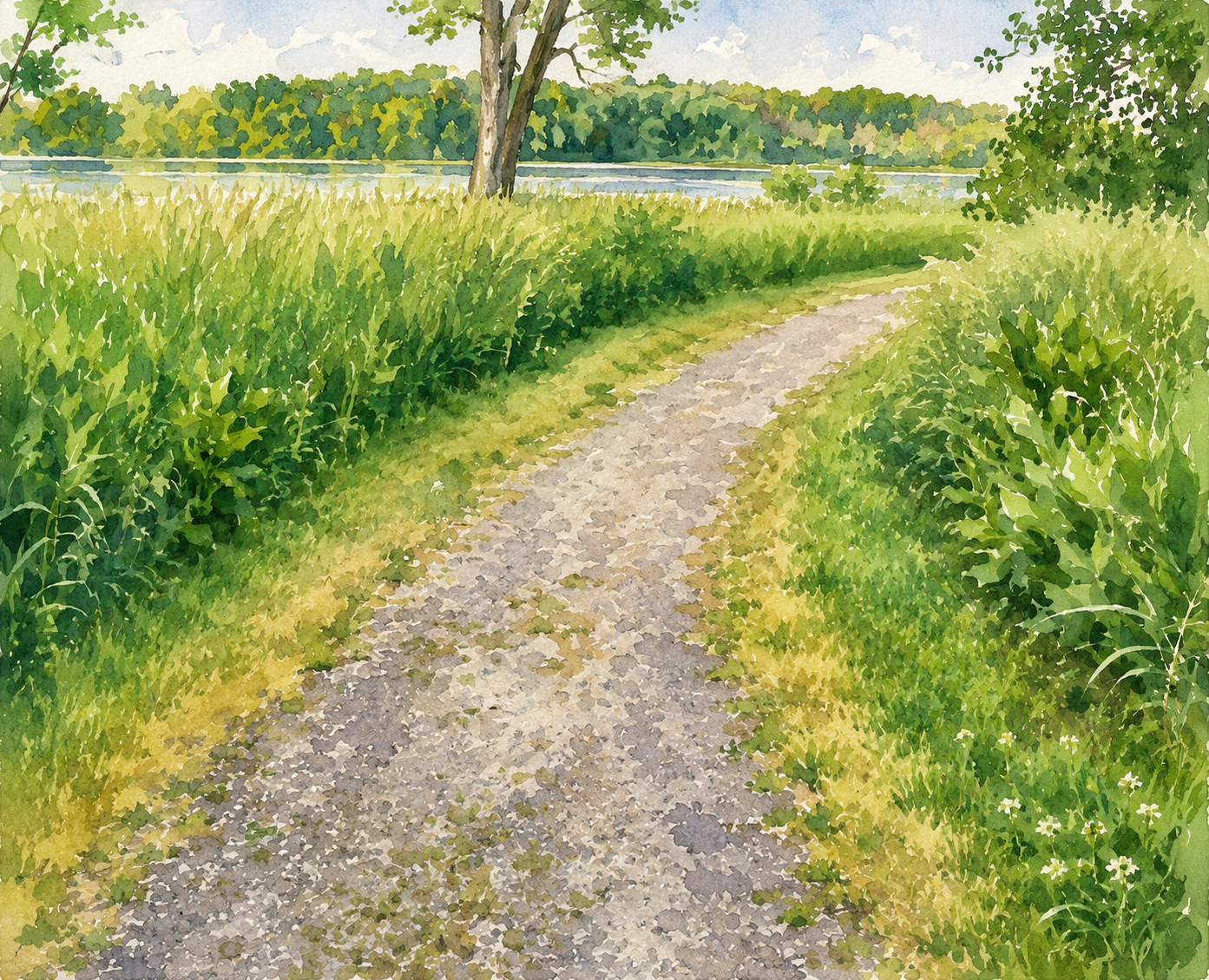
Trail walking on the state park trail.

I met Murray through my part time job in high school. He went to West High School, and I went to Assumption. Today, I might call him a gear head. Maybe I called him that then.

He was building a “hot rod” at a gas station on Brady Street. When I last saw it he had stripped it down to the frame. Part-by-part he assembled it himself. He planned to use it to “ride the ones” (driving the one-way streets in downtown Davenport with other high school aged kids with cars). I don’t think he had any other real plans for his hand-made car. It seemed to be more about the process.

“Right to repair is a legal right for owners of devices and equipment to freely modify and repair products such as automobiles, electronics, and farm equipment,” according to Wikipedia. “Right to repair may also refer to the social movement of citizens putting pressure on their governments to enact laws protecting a right to repair.”

In the late sixties, we hadn’t heard the term “right to repair.” Murray assumed he could do what he wanted to get his vehicle street legal. He knew what being street legal meant. Today, manufacturers are tightening the screws on repairing vehicles, farm equipment, and electronic devices, blocking users and owners from working on their stuff. It seems anti-American… and wrong.

I don’t think denying the right to repair will stand in 21st Century America.

My maternal grandmother had no hesitation about taking apart her stove and fixing a burner. She was born in the late 1800s, and that’s what she learned growing up. When I saw her do this, the stove came with her rented apartment. A younger person might have just called the landlord.

When I studied the rural Minnesota community where my great, great grandfather settled, there were two blacksmith shops in a community of about 200 families. At a distance from major commercial centers (if such even existed in the 1800s), and with Original Equipment Manufactured parts distribution (not called that or even in existence then) a long and slow process, locals devised indigenous solutions to mechanical problems with available materials and said blacksmiths. This seems so American, so pragmatic.

No one would argue about modern day equipment, vehicles, and farm implements being more complicated than they were in the late 1800s. If a wheel fell off a wagon and broke, the owner would mend the wheel, axle, or both and start operating it again. The computer technology embedded in modern equipment was in an unforeseeable future. Likewise, computer-aided design enabled such precision that would be hard to replicate using a hammer, anvil, and heat. Where is the balance between the owner of a piece of equipment fixing it themselves and the manufacturer insisting that only they had the expertise to do so? This aspect of society is changing and to many of us, it make no sense.

I lost track of Murray when I went to university. Last time I saw him he was working at a gas station on Riverside Drive in Iowa City. Sometimes I think about what society is losing with fewer gear heads and people like my grandmother around. We changed in ways that shut the door on returning to a life where folks knew how every device in their home worked and how to fix it. It is one way our lives have gotten poorer with increased technology.

Some Friday night I’ll have to go ride the ones in my home town to see if teenagers still do. Somehow, I doubt it.